Skip to content
In manufacturing and design, precision matters—but perfect accuracy is often neither practical nor cost-effective. That’s where engineering tolerances come into play. Tolerances define the acceptable range of variation in a part’s dimensions or geometry, ensuring components fit and function properly despite real-world imperfections.
What Is an Engineering Tolerance?
Engineering tolerance defines the acceptable variation range from a specified “nominal” dimension—ensuring parts function correctly without excessive precision.

Core Concepts
- Nominal dimension: Target measurement (e.g., Ø10.00 mm).
- Tolerance: Permissible deviation from nominal (e.g., ±0.05 mm).
- Limits: Actual acceptable range (e.g., Ø9.95–10.05 mm).
Why It Matters
Tolerances enable interchangeable parts, ensure assembly quality, and help balance manufacturing cost versus precision.
Concrete Example
Specifying a shaft as Ø10 ±0.1 mm means the actual part can safely measure any diameter from 9.90 mm to 10.10 mm—offering functional reliability while reducing fabrication expense.10 ±0.1 mm is acceptable between 9.9 mm and 10.1 mm.
Why Are Tolerances Important?
In real-world manufacturing, no two parts are ever exactly alike—tolerances allow that variation while maintaining functionality.
Interchangeability
Tolerances ensure that parts produced at different times or by different suppliers fit together properly. This standardization is essential for scalable, modular manufacturing.
Functional Performance
Properly applied tolerances prevent issues like excessive play, binding, or mechanical failure. For example, in bearings or sliding components, too loose or too tight a fit compromises efficiency or wear.
Cost Optimization
Tighter tolerances demand more time, better machines, and stricter inspection. By specifying only what’s necessary, you reduce waste, tooling complexity, and production cost.
Inspection and QA Control
Tolerances provide clear acceptance criteria for quality control teams. Without them, parts can’t be reliably verified, and rework or disputes become frequent.

Assembly Efficiency
With properly designed tolerances, assembly lines experience fewer jams, misalignments, or rework delays—ensuring faster and more reliable product builds.
Types of Engineering Tolerances
1. Dimensional Tolerances
Control allowed variations in linear measurements—length, diameter, hole center locations, etc.
- Unilateral: Variation allowed in only one direction (e.g., +0.2 / −0.0 mm).
- Bilateral: Equal variation in both directions (e.g., ±0.1 mm).
- Limit dimensions: Directly define max and min values (e.g., 10.1 / 9.9 mm).
2. Geometric Tolerances (GD&T)
Govern form, orientation, and position using symbols to ensure fit, function, and interchangeability.
| Symbol | Type | Controlled Feature |
|---|---|---|
| ⏤ | Flatness | Surface planarity |
| ∥ | Parallelism | Distance uniformity between planes |
| ○ | Circularity | Roundness of shafts, holes |
| ⊕ | Position | Exact feature location |
| ⊥ | Perpendicularity | 90° alignment |
| ◎ | Concentricity | Common axis alignment |
3. Surface Finish Tolerances
Specify allowable surface roughness (Ra), affecting sealing, wear, and visual appearance.
4. Angular Tolerances
Control deviation from nominal angles—e.g., ±1° for chamfers, taper angles, and angled features.

Types of Fits in Engineering
Fits define how tightly or loosely two mating parts (e.g., shafts and holes) assemble. Selecting the correct fit is crucial for performance, assembly, and serviceability.

1. Clearance Fit
Always provides space between parts for free movement.
- Examples: H7/g6, H8/f7
- Applications: Bearings, hinges, sliding assemblies, gears
2. Interference Fit
Requires force or heating to assemble; results in a tight, immovable joint.
- Examples: H7/p6, H7/u6
- Applications: Press-fit gears, bushings, crankshaft assemblies
3. Transition Fit
May result in a slight clearance or interference—offers a compromise between easy assembly and positional stability.
- Examples: H7/k6, H7/n6
- Applications: Locating pins, couplings, assemblies that need both alignment and retention
ISO Tolerance Grades (IT)
The ISO 286 system provides a standardized way to define dimensional tolerances for mating parts across manufacturing disciplines. These are known as International Tolerance (IT) grades, ranging from ultra-precision to general-purpose fits.
Each grade corresponds to the level of precision needed, with IT01 being the tightest and IT16 the most permissive. Selecting the right grade prevents over-engineering and reduces cost.
Common IT Grades and Applications
| IT Grade | Description | Example Use Cases |
|---|---|---|
| IT01–IT4 | Ultra-high precision | Gauges, micrometers, calibration blocks |
| IT5–IT7 | High-precision engineering | Bearings, critical mechanical assemblies |
| IT8–IT11 | Standard engineering tolerances | Shafts, pulleys, flanges |
| IT12–IT16 | Low-precision or structural parts | Weldments, brackets, casings |

How IT Grades Impact Design
Choosing the appropriate IT grade directly affects cost, inspection complexity, and manufacturability. For example, a switch from IT7 to IT9 on a housing bore can reduce production costs significantly while still achieving functional performance. Always align IT grade with the part’s functional and assembly requirements.
Best Practices for Tolerance Design
Over-engineering tolerances can inflate costs and increase manufacturing complexity. The key is to apply precision where it matters most—while keeping the rest within manufacturable limits.
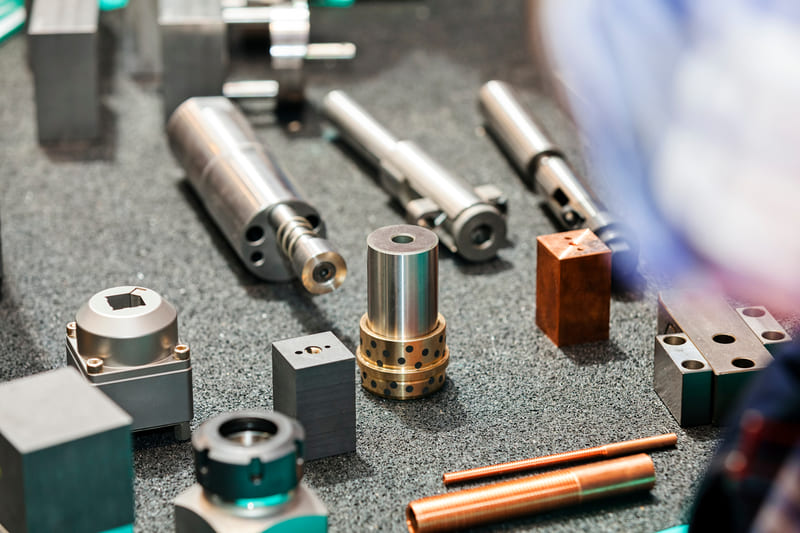
Smart tolerance design balances function, manufacturability, and inspection effort. It also aligns design intent with real-world production capability.
1. Apply Tight Tolerances Only Where Needed
Not every feature needs ±0.01 mm accuracy. Reserve high-precision tolerances for interfaces that are critical to performance or fit—such as bearing seats, mating surfaces, and alignment bores.
2. Use Standard Fits
When designing shafts, pins, or holes, apply standardized fits (like H7/g6 or H8/f7) from ISO or ANSI systems. These are well-understood by manufacturers and support interchangeability without custom setups.
3. Highlight CTQ Features
Mark critical-to-quality (CTQ) features on drawings with symbols or bold annotations. This helps inspection teams prioritize and ensures downstream quality assurance aligns with design intent.
4. Involve Manufacturers Early
Collaborate with your machining partners early in the design process. Their DFM (Design for Manufacturability) insights can help you relax tolerances where possible—reducing cost and cycle time without compromising function.
5. Consider Thermal Expansion
For assemblies using dissimilar materials (e.g., aluminum and steel), factor in differential thermal expansion. What fits at 20°C might misalign or seize at 80°C. Use tolerance stack-up analysis to compensate accordingly.
Applying these practices not only enhances manufacturability but also streamlines inspection, improves first-pass yield, and keeps projects within budget.
Tolerances vs. Cost
Precision comes at a price. While tight tolerances ensure functionality and fit, they can significantly drive up manufacturing costs. Striking the right balance is essential for cost-effective design.
Tolerances are not just a design consideration—they directly impact tooling, production time, and quality control. Here’s how each factor scales with tighter tolerances:

Cost Impact Breakdown
| Factor | Impact of Tighter Tolerances |
|---|---|
| Machine Setup Time | ⬆ Increases for accuracy adjustments and calibration |
| Tooling & Fixtures | ⬆ Requires precision jigs, fixtures, and specialized tooling |
| Scrap Rate | ⬆ More likely due to parts falling out of spec |
| Inspection Time | ⬆ Increased use of CMMs, optical systems, and manual checking |
| Part Cost | ⬆ Unit cost rises significantly with tighter process controls |
Design Cost Rule of Thumb
If you halve the tolerance on a feature, expect the part cost to double. This isn’t an absolute rule, but it highlights how precision scales in manufacturing economics.
To manage cost while maintaining quality, focus on assigning tight tolerances only to functionally critical dimensions. For all other features, stick to standard or general tolerances whenever possible.
Conclusion
Engineering tolerances serve as the unsung heroes of precision manufacturing. They allow us to reconcile the ideal with the achievable—ensuring parts perform reliably in the real world, even if they deviate slightly from the blueprint. But mastering tolerances isn’t just about technical rigor; it’s a strategic tool for balancing quality, cost, and speed.
When I first started working with overseas manufacturers, I underestimated how drastically tolerance selection could impact pricing and delivery. A tolerance of ±0.01 mm seemed insignificant—until I saw the production costs spike and scrap rates climb. It was a turning point in my understanding of engineering documentation: specifying only what truly matters is just as important as being precise.
Key Takeaways
- Function-Driven Tolerancing: Always define tolerances based on how a part interacts within an assembly—not arbitrary standards.
- Use Industry Guidelines: ISO 286 and ANSI fits are your best friends for consistent mating conditions.
- Cost Matters: Halving a tolerance can double your part cost. Always justify tight tolerances with functional needs.
- Communicate Clearly: Don’t rely solely on 3D models. A well-labeled 2D drawing avoids ambiguity.
- Collaborate with Engineers: Involve your supplier’s technical team early to fine-tune specifications and avoid costly oversights.
Get Expert Help With CNC or Precision Part Tolerances
At Onlyindustries, we go beyond basic part manufacturing. Our engineering team provides full-stack support—including GD&T consultation, tolerance analysis, and ISO-compliant inspection documentation—tailored to your industry needs. Whether you’re building aerospace mounts, medical housings, or high-volume automotive components, we make sure every micrometer counts.
We also understand the practical side of tolerance-driven design: balancing quality, lead time, and price. By aligning production strategies with your end-use goals, we help you reduce rework, shorten procurement cycles, and deliver repeatable precision across batches.
Contact us today for a free technical review or to get a fast, reliable quote on your next CNC or custom machining project.