Skip to content
CNC turning is a foundation process in modern subtractive manufacturing, enabling cylindrical and axis-symmetric parts to be produced with high precision, consistency, and efficiency. By rotating the workpiece at a controlled speed while a programmed cutting tool removes material, precision CNC turning centers can often hold ±0.02 mm to ±0.01 mm on select critical turned features (especially stable diameters and short axial lengths) when the part design and inspection method support it. As a broad shop baseline, many CNC suppliers quote around ±0.005 in (±0.13 mm) for standard turned features unless otherwise specified; tighter tolerances are often achievable but typically require dedicated workholding, stable thermal/process control, and sometimes secondary operations (e.g., reaming or grinding). Actual achievable tolerances depend on the material, geometry (including length-to-diameter ratio), feature type, datum scheme, and the inspection/measurement method defined on the drawing.
From mission-critical aerospace components to high-volume automotive fittings, from medical devices to miniature electronics connectors, CNC turned parts are found in almost every engineered product. Typical examples include shafts, pins, spacers, sleeves, bushings, threaded fasteners, valve bodies, and custom rotational geometries designed to meet specific mechanical or functional requirements.
This guide provides an engineer-level understanding of CNC turning—from how the process works and which materials are best suited, to core turning operations, surface finishing options, and the key criteria for choosing a reliable CNC machining supplier. Whether you are a procurement professional, mechanical engineer, product designer, or OEM buyer, this overview will help you make informed decisions and improve project success.
What Are CNC Turning Parts?
CNC turning parts are precision-engineered components produced through a subtractive machining process in which a workpiece rotates while cutting tools remove material to form the desired geometry. Because the part itself spins during machining, the resulting shapes are typically cylindrical or axis-symmetric, such as straight shafts, stepped diameters, tapered features, or threaded sections. These geometries make CNC turning particularly valuable for components that must rotate, align, or interface precisely within mechanical assemblies.
Unlike manufacturing methods that rely on casting, forging, molding, or extrusion, CNC turning usually begins with solid bar stock or billets. This gives engineers and buyers access to materials with highly predictable mechanical properties, consistent density, and stable structural integrity. Whether the part is made from aluminum, stainless steel, alloy steel, brass, or high-performance polymers, the turning process ensures that the final geometry is cut directly from the base material—resulting in excellent dimensional stability and clean surface definition.
CNC turned parts often play foundational roles in mechanical systems because they act as connection points, pivot structures, sealing interfaces, or load-transmitting elements. For example, a simple shaft must maintain precise diameters to support bearings and transmit torque, while a custom bushing must provide tight concentricity to ensure smooth movement between mating parts. Similarly, threaded components created on a lathe—such as studs, plugs, or fittings—must achieve specific thread forms and surface qualities to guarantee leak-free or vibration-resistant performance.

What distinguishes CNC turned components is the level of control the process offers over both micro-geometry and macro-geometry. Features such as relief grooves, radii, chamfers, undercuts, O-ring seats, or internal bores can all be machined within a single setup, reducing part variation and improving assembly reliability. Even internal features that are invisible once assembled—such as precision bores used for fluid flow or engagement depth—are machined with the same accuracy as external ones. This allows turned parts to function as both structural and functional elements in complex assemblies.
Additionally, CNC turning provides consistent repeatability even when producing parts with demanding tolerances. Once the digital toolpath is defined, the machine automatically repeats each movement, ensuring that every component in a production batch matches the nominal design. This is especially important for components such as spacers, connector pins, valve stems, or medical screws, where a slight deviation in diameter or concentricity could affect the performance of the entire system.
In summary, CNC turning parts are not simply “round components”; they are highly engineered, function-critical elements shaped by a precise rotational machining process. Their geometry, material integrity, and dimensional accuracy make them indispensable in assemblies requiring reliable mechanical interaction, stable alignment, and long-term durability.
How CNC Turning Works
CNC turning works on a fundamental mechanical principle: the workpiece rotates at controlled speeds while a stationary or guided cutting tool removes material to generate the desired geometry. Unlike milling—where the tool rotates and the part remains fixed—turning reverses this relationship, allowing cylindrical or axis-symmetric shapes to be produced with outstanding uniformity. When computer numerical control (CNC) is introduced, this principle becomes a highly precise, repeatable, and efficient manufacturing method.

Every CNC turning operation begins with securing a raw bar or billet inside a chuck or collet. This clamping mechanism not only grips the material during rotation but also helps maintain concentricity, which directly influences the accuracy of the final part. Modern CNC lathes use precision spindle systems and controlled clamping to support stable cutting conditions before material removal begins.
With the material rotating, the CNC machine follows a pre-programmed toolpath defined by G-code. This code controls every movement of the cutting tool: depth of cut, feed rate, spindle speed, and transitions between features. Movements are typically coordinated along two main axes. The Z-axis governs the tool’s motion along the length of the part, defining features such as shoulders, steps, and overall length. The X-axis controls motion toward or away from the centerline, defining diameters, tapers, and contours.
Modern CNC turning processes manage tool wear and thermal drift through controlled cutting parameters, inspection plans, and—on some machines—probing or in-process measurement.
Beyond basic turning, many CNC lathes support live tooling and sub-spindles. Live tooling enables operations such as cross-drilling, milling flats, or cutting slots without moving the part to a separate machine. Sub-spindles can automatically re-grip the part to finish the back side, improving alignment and reducing handling time.
The cycle typically ends with cutoff/parting to separate the finished component from the bar. In high-volume production, bar feeders continuously advance material so the machine can produce parts efficiently with minimal manual intervention.
If you want a reputable external reference that explains turning fundamentals clearly (workpiece rotates, tool feeds linearly, cylindrical geometry), see: Xometry: What is Turning in Machining?
Types of CNC Turning Processes
CNC turning encompasses a range of machining operations, each designed to create specific features, manage dimensional transitions, or prepare functional interfaces. Although these operations can occur on the same machine, they differ in purpose, tool engagement, and how material is removed. Understanding these processes helps engineers design parts that are both manufacturable and cost-effective.
The turning workflow often begins with facing, which creates a flat reference surface perpendicular to the rotational axis. This establishes a datum for axial dimensions and improves consistency for downstream operations.
Next, straight turning defines outside diameters and stepped profiles along the length of the part. This is the core operation for shafts, bushings, sleeves, and spacers, and it strongly influences fit and function in assemblies.

For functional recesses, grooving creates channels such as O-ring grooves, snap-ring seats, or thread reliefs. Because grooves often serve sealing or retention functions, dimensional control is critical.
Threading creates internal or external screw threads by synchronizing the tool feed with spindle rotation. This synchronization is critical for maintaining correct thread pitch, flank geometry, and engagement—especially for fittings, plugs, fasteners, and connectors where thread quality directly affects sealing, preload, and fatigue performance.
For globally recognized ISO metric screw thread definitions, profiles, sizes, and tolerances, CNC turned threaded components are typically designed and manufactured in accordance with the following international standards:
- ISO 68-1 — ISO general purpose screw threads: Basic profile.
Defines the fundamental 60° metric thread profile geometry, including thread angle, crest, and root form. This standard establishes the basic shape of ISO metric threads. - ISO 261 — ISO general purpose metric screw threads: General plan.
Specifies the standard combinations of nominal diameters and pitches (coarse and fine series), helping designers and buyers identify which ISO metric thread sizes are commonly used worldwide. - ISO 965-1 — ISO general purpose metric screw threads: Tolerances (principles and basic data).
Defines the tolerance system and fundamental deviation principles that underpin common thread classes such as 6H (internal threads) and 6g (external threads), which are widely used in CNC turned fasteners and fittings.
Together, these ISO standards ensure that CNC turned threaded parts achieve global interchangeability, proper fit, and predictable functional performance across industries such as automotive, aerospace, machinery, and fluid control systems.
Internal geometry is created via drilling and refined by operations such as boring or reaming where tighter hole tolerances are required. Because the workpiece rotates, axial hole concentricity is typically strong, supporting alignment and repeatable assembly behavior.
Finally, parting (cutoff) separates the finished part from the bar. Cutoff stability and tool condition influence the back-face finish and how much secondary finishing is needed.
Summary Table: Common CNC Turning Processes
| Turning Process | Description | Typical Applications | Technical Notes |
|---|---|---|---|
| Facing | Creates a flat surface perpendicular to the rotational axis, establishing an axial datum. | Part length control, clean reference surfaces | Critical for overall length accuracy and downstream feature positioning |
| Straight Turning | Removes material along the length of the rotating workpiece to produce consistent diameters. | Shafts, sleeves, spacers, bushings | Primary operation for diameter and concentricity control |
| Taper Turning | Produces conical or angled diameter transitions along the part axis. | Alignment tapers, mechanical interfaces | Requires precise toolpath control to maintain angle accuracy |
| Grooving | Cuts controlled-width and depth recesses on the OD or face of the part. | O-ring grooves, snap-ring seats, thread reliefs | Often function-critical for sealing or retention |
| Threading | Forms internal or external threads synchronized with spindle rotation. | Fasteners, fittings, plugs, connectors | Thread form and surface finish affect sealing and fatigue life |
| Drilling | Creates axial holes using a rotating drill while the workpiece spins. | Flow passages, clearance holes | Typically followed by boring or reaming for tighter tolerances |
| Boring / Reaming | Refines drilled holes to improve size accuracy, straightness, and concentricity. | Precision bores, bearing seats | Used when tight internal tolerances are required |
| Parting (Cutoff) | Separates the finished component from bar stock. | Final separation in production runs | Back-face finish may require secondary deburring |
Common Materials Used in CNC Turning
Material selection is one of the most influential decisions in CNC turning. Every material behaves differently under cutting forces and heat, and these differences directly affect surface finish, tool life, cycle time, and final part performance. Below is a detailed examination of widely used materials in CNC turning, why they are chosen, and where they typically excel.
1) Aluminum: Lightweight, Versatile, and Highly Machinable
Aluminum—especially grades such as 6061 and 7075—is frequently selected because it machines efficiently with low cutting forces, allowing higher spindle speeds and excellent surface finish with good tool life. These characteristics can reduce cycle time and overall machining cost, especially in medium-to-high volume production.
6061 is commonly used for general-purpose turned components such as spacers, sleeves, housings, and fixtures because it balances machinability, corrosion resistance, and adequate strength. 7075 is often chosen when higher strength-to-weight ratio is needed, such as aerospace structural interfaces or heavily loaded mechanical features.
Aluminum also responds well to anodizing for corrosion resistance, wear improvement, and part identification. For external reference on aluminum 6061 alloy properties, see: AZoM: Aluminium / Aluminum 6061 Alloy (UNS A96061)
2) Stainless Steel: Durable, Corrosion-Resistant, and Mechanically Stable
Stainless steel is selected when parts must withstand corrosion, repeated cleaning/sterilization, or harsh service environments. 303 is often used when machinability is a priority for high-volume turned parts. 304 provides strong general corrosion resistance but can be more demanding to machine. 316 is commonly selected for improved corrosion resistance in chloride or chemically aggressive environments (marine, medical, and chemical processing).

Because stainless steels can work-harden during machining, stable parameters, sharp tooling, and proper coolant strategy help maintain tolerances and surface integrity.
3) Alloy Steel: High Strength, Wear Resistance, and Heat-Treatment Capability
Alloy steels such as 4140 and 4340 are chosen for parts requiring high strength, fatigue resistance, and heat treat capability. They are widely used for shafts, couplings, mechanical power transmission parts, and industrial components that experience repeated loading or impact.
4) Brass & Bronze: Exceptional Machinability and Dimensional Stability
Brass is prized for excellent machinability and stable chip control, supporting high throughput for connectors, fittings, valve components, and precision small parts. Bronze is often used where wear resistance and low friction are valuable, such as bushings and bearing surfaces.
5) Engineering Plastics: Lightweight, Chemical Resistant, and Functionally Versatile
Engineering plastics such as POM (Delrin), Nylon, PTFE, and UHMW-PE are used when electrical insulation, chemical resistance, low friction, or weight reduction are required. Plastics require careful heat control and appropriate tooling to avoid deformation while still achieving clean edges and consistent dimensions.
In CNC turning, the chosen material influences cutting parameters, tool life, achievable tolerances, and final part performance. Selecting the right material ensures predictable machining behavior and long-term reliability in the target environment.
CNC Turning vs. CNC Milling
CNC turning and CNC milling are both core subtractive manufacturing processes, but they operate on different kinematics and are typically chosen for different geometries. Turning rotates the workpiece and uses a tool that feeds primarily along length/diameter to create cylindrical or axis-symmetric features. Milling rotates the cutting tool and machines flats, pockets, slots, and multi-face geometry that cannot be produced through turning alone.

In practical manufacturing, the choice often depends on the part’s “dominant geometry.” If the design is primarily defined by diameters, lengths, tapers, grooves, and threads, CNC turning is usually the most efficient route. If the design requires multiple planar faces, complex pockets, angled surfaces, or 3D contours, CNC milling is typically required. Many real-world parts use both processes (turn first for the primary cylindrical form, then mill for flats, keyways, cross-holes, or patterns).
For a clear external explanation of the turning vs milling difference (including the motion principle and typical outcomes), see: Hubs: What is CNC Milling? (includes turning vs milling difference)
Comparison Table: CNC Turning vs. CNC Milling
| Comparison Category | CNC Turning | CNC Milling |
|---|---|---|
| Primary Motion Principle | Workpiece rotates; tool feeds along X/Z axes | Tool rotates; workpiece remains fixed or moves along multiple axes |
| Best-Suited Geometry | Cylindrical and axis-symmetric features | Flat surfaces, pockets, slots, complex 3D geometry |
| Typical Components | Shafts, pins, bushings, sleeves, threaded parts | Housings, brackets, plates, manifolds, enclosures |
| Surface Finish Capability | Excellent on diameters due to continuous cutting | Excellent possible; depends on toolpath strategy |
| Production Efficiency | Highly efficient for round parts, especially in volume | Highly flexible for complex or multi-face parts |
| Process Flexibility | Optimized for rotational features | Optimized for prismatic and multi-directional features |
| Modern Hybrid Capability | Mill-turn centers integrate milling features | Often combined with turning for hybrid workflows |
Advantages of CNC Turning
CNC turning is widely adopted because it combines high dimensional control, strong repeatability, and efficient production for axis-symmetric geometry. The process naturally supports excellent concentricity and diameter consistency—key requirements for rotating interfaces, bearing seats, sealing diameters, and threaded connections where small deviations can cause vibration, leakage, premature wear, or assembly failure.
Turning also tends to produce very good surface finishes on cylindrical features due to continuous tool engagement. This can reduce secondary finishing requirements and improve functional performance in sliding or sealing applications.

For medium-to-high volume production, CNC turning can be extremely cost-effective. Bar feeders, automated tool changers, and stable cycle times enable scalable output with minimal operator intervention. Swiss-type lathes further enhance efficiency for small, high-precision components, such as medical fasteners and electronics connectors.
Finally, modern turning centers can integrate live tooling, Y-axis motion, and sub-spindles, enabling multi-operation manufacturing (turn + drill + mill features) in a single setup—reducing transfers, fixturing error, and lead time.
Surface Treatments for CNC Turned Parts
Surface treatments do more than improve appearance. For many industries—such as aerospace, automotive, medical devices, and fluid control—the surface condition directly affects corrosion resistance, wear life, friction, sealing performance, and long-term reliability. CNC turning produces smooth, uniform surfaces that are an excellent foundation for post-processing treatments.
Anodizing is widely applied to aluminum components to create a controlled oxide layer that improves corrosion resistance and surface hardness. Hard anodizing is often selected for higher wear requirements. For general anodizing information from an industry organization, see: The Aluminum Anodizers Council.
Passivation is commonly applied to stainless steel to remove surface contamination and enhance corrosion resistance without changing dimensions. When buyers need a defined standard reference for passivation, ASTM specifications are commonly used (requirements vary by project). For ASTM A967, see: ASTM A967/A967M.
Electroplating (e.g., nickel, chrome, zinc) can add corrosion protection, wear resistance, or functional surface properties for steels and copper alloys. Black oxide can provide mild corrosion resistance and reduced glare for steels. Bead blasting produces a uniform matte texture and can prepare surfaces for coatings. Powder coating adds a durable polymer layer for corrosion/impact resistance (often on larger components).

Surface Treatments for CNC Turned Parts
| Surface Treatment | Compatible Materials | Primary Purpose | Key Advantages | Important Notes / Limitations |
|---|---|---|---|---|
| Anodizing / Hard Anodizing | Aluminum | Oxide layer formation | Improves corrosion resistance, wear resistance, appearance | Hard anodizing increases thickness; dimensional allowance required |
| Passivation | Stainless Steel | Surface cleaning and oxide restoration | Enhances corrosion resistance without coating buildup | Does not improve wear resistance |
| Electroplating (Ni, Cr, Zn) | Steel, Brass, Selected Stainless | Metallic surface coating | Corrosion protection, wear resistance, improved appearance | High-strength steels may require hydrogen embrittlement relief |
| Black Oxide | Carbon Steel, Some Stainless | Controlled surface oxidation | Low reflectivity, mild corrosion resistance | Typically sealed with oil or wax; not for aggressive environments |
| Bead Blasting | Metals, Some Plastics | Mechanical surface texturing | Uniform matte appearance, hides machining marks | Not a protective coating; may affect tight tolerances |
| Powder Coating | Most Metals | Protective polymer coating | Strong corrosion and impact resistance | Not suitable for threads or precision fits unless masked |
| Polishing / Buffing | Most Metals | Surface smoothing | Improves appearance and surface roughness (Ra) | Friction behavior depends on material pairing |
Main Industries Applied by CNC Turned Parts
CNC turned components play foundational roles in industries where precision, durability, and repeatable quality are essential. Their cylindrical geometry and tight tolerances enable critical functions—from controlled motion and load transfer to sealing integrity and reliable electrical connectivity.
Aerospace Industry
Aerospace applications demand high reliability under vibration, fatigue loading, and temperature variation. Turned components such as actuator shafts, landing gear pins, sensor sleeves, and hydraulic fittings often require strict inspection and documented process control. Aerospace supply chains commonly reference quality system requirements such as: SAE AS9100D.
Automotive Industry
Automotive systems rely on high-volume production of turned parts such as studs, shafts, bushings, valve components, and threaded connectors. Consistent diameters and repeatable geometry support assembly interchangeability and stable performance under heat and vibration.
Robotics & Automation Industry
Robotics depends on precise rotational interfaces and controlled fits. Turned couplings, axles, spacers, bearing seats, and sensor mounts support accurate movement while minimizing backlash and wear—especially in high-duty cycle automation.
Medical & Healthcare Industry
Medical components (e.g., bone screws, implant stems, instrument bushings) often require tight tolerances and cleanable/sterilizable surfaces. Material selection, surface condition, and inspection documentation directly influence safety and regulatory compliance.
Industrial Machinery & Manufacturing Equipment
Industrial equipment uses turned shafts, rollers, couplings, hydraulic rods, and bearing interfaces that must withstand continuous wear and high loads. Accuracy in diameter control and surface finish supports bearing life and stable sealing performance.
Oil, Gas & Energy Industry
Energy applications require robust threads and sealing surfaces for valves, fittings, nozzles, and pressure-adapter bodies. Material choice and corrosion strategy (passivation, plating, coatings) are especially important in aggressive environments.
Electronics & Telecommunications
Electronics and telecom often require miniature, burr-controlled turned components such as connector pins, RF housings, inserts, and standoffs. Swiss-type turning is commonly used for small parts requiring high consistency at volume.

Scientific Instruments & Laboratory Equipment
Precision instruments use turned alignment features, micrometer components, and stable mechanical interfaces where friction, repeatability, and dimensional stability affect measurement accuracy.
Renewable Energy & Solar Industry
Outdoor installations depend on corrosion-resistant hardware and stable mechanical interfaces. Turned bushings, shafts, connectors, and sensor housings support long-term performance under weather exposure and vibration.
Consumer Products & Smart Devices
Turned knobs, sleeves, decorative hardware, and precision housings are used where both cosmetic consistency and functional fit matter. Aluminum and brass are popular for clean surfaces and attractive finishing (anodizing/plating).
Choosing a Reliable CNC Turning Supplier
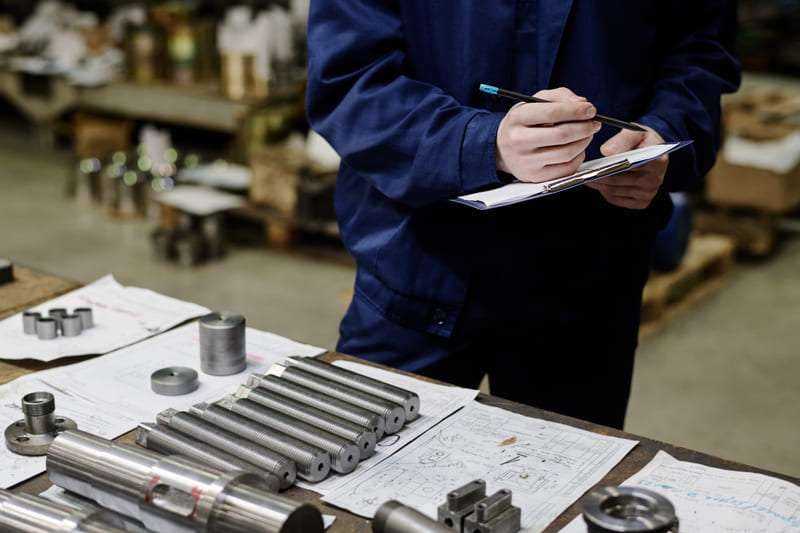
Selecting the right partner ensures performance, quality, and long-term reliability. When evaluating a CNC turning supplier, look for:
- Experience with similar parts or industries (materials, tolerances, finish, compliance needs).
- In-house quality control such as CMM, surface roughness measurement, and documented inspection reporting.
- Proven tolerance capability verified with measurement records (not only verbal claims).
- Finishing and secondary operations with controlled partners and traceable process management.
- Certifications, such as ISO 9001:2015 and (if required) aerospace frameworks such as AS9100D.
- DFM support and proactive communication to prevent manufacturability risks early.
Pro Tip: For new parts or tight-tolerance programs, request a First Article Inspection (FAI) package before full production to confirm critical dimensions and functional features.
Conclusion
CNC turning remains a go-to manufacturing method for producing high-precision round components at scale. From shafts to fittings, this process offers a combination of versatility, cost-effectiveness, and surface quality that is difficult to replicate with other methods.
Whether you’re sourcing a stainless steel valve body, a precision aluminum spacer, or a complex medical component, understanding the CNC turning process—from material choice and operation planning to surface finishing and supplier qualification—is key to getting reliable, high-performing parts.
Partner with Experts in CNC Turning
At Onlyindustries, we specialize in precision CNC turning for demanding industries. From material sourcing to machining, surface treatment coordination, and inspection reporting, our team ensures every part meets your drawings and critical requirements.
Need high-quality CNC turned parts?
Contact us today for technical consultation or a fast, accurate quote.