Skip to content
Surface finishing issues can ruin aesthetics and performance—bead blasting provides a clean, uniform solution without compromising precision.
Bead blasting is a non-destructive abrasive finishing technique that removes impurities and creates a matte surface, ideal for precision parts across aerospace, medical, and electronics industries.
In this guide, I’ll walk you through how bead blasting works, where it’s used, and what to watch out for when selecting this process for your components.
What Is Bead Blasting?
Struggling with inconsistent surface finishes on your machined parts? Bead blasting offers a reliable solution for achieving clean, uniform surfaces—without sacrificing part precision.

Bead blasting is a surface finishing process where spherical media, such as glass or ceramic beads, are blasted at a component to clean, texture, or prepare the surface. This results in a matte, uniform finish without removing significant material or altering part dimensions.
Let me walk you through the details of bead blasting—what it is, how it differs from other finishing methods, and why it’s become a preferred post-processing step across manufacturing industries.
How Does Bead Blasting Work?
Understanding the basics of bead blasting means breaking it down into three parts: media, propulsion, and surface interaction.
Bead blasting is a mechanical abrasion technique that uses high-pressure air or a centrifugal wheel to accelerate small beads against a workpiece’s surface. These beads, typically made of glass or ceramic, hit the part to clean contaminants, dull shiny surfaces, or create a satin texture ideal for subsequent coating or aesthetic appeal.
Core Components of the Process
| Element | Description |
|---|---|
| Blasting Media | Glass, ceramic, or plastic beads—chosen based on part material and finish required |
| Propulsion Method | Compressed air for manual control; wheel blasting for automated high-volume runs |
| Impact Mechanism | Beads strike the surface, removing scale, oxidation, or tool marks while imparting a smooth texture |
| Containment | Enclosed blasting cabinets or rooms collect and recycle media, ensuring safety and efficiency |
What Makes It Different?
Unlike sandblasting, which is aggressive and can alter part dimensions, bead blasting is much gentler. It’s ideal for applications that require cosmetic uniformity and dimensional control—like anodizing preparation, surgical tool finishing, or aluminum enclosure refinement.
Real-World Example
One of our European clients in the electronics industry needed a matte finish on CNC aluminum bezels without scratching or warping. We used fine glass beads at low pressure and delivered parts with perfect surface consistency—no masking required. This not only improved visual appeal but also reduced post-processing time on their end.
What Finishes Can You Expect from Bead Blasting?
The finish result depends on media size, air pressure, nozzle distance, and substrate hardness.
Bead blasting typically creates a satin or matte surface finish, free from gloss but still smooth to the touch. It’s ideal for both functional and cosmetic applications, especially when uniformity and cleanliness are priorities.
Typical Finish Results
- Matte texture that reduces glare
- Consistent appearance across surfaces
- Removes fingerprints, oxidation, and tool marks
Here’s a quick comparison of expected Ra values by media type:
| Media Type | Ra (µm) | Finish Appearance |
|---|---|---|
| Fine Glass Beads | 1.6 – 3.2 | Silky matte |
| Ceramic Beads | 3.2 – 6.3 | Rougher matte |
| Plastic Media | < 1.6 | Gentle, soft finish |
Why Choose Bead Blasting?
Bead blasting isn’t just about how a part looks—it’s about functional readiness. By smoothing out minor surface inconsistencies and cleaning away microscopic debris, the process enhances bonding strength for coatings and improves product life span.
When Should You Use Bead Blasting?
Knowing when to use bead blasting can mean the difference between a quality finish and costly rework.
If your application requires a clean, uniform matte texture, or if your parts are undergoing subsequent processes like anodizing, bead blasting is often the go-to choice. It’s especially effective for components that can’t afford dimensional loss, such as precision housings, implants, or turbine parts.
Ideal Use Cases
- Before powder coating or anodizing for better adhesion
- Deburring complex parts like medical implants or aerospace fittings
- Cosmetic finishing on consumer electronics
- Post-machining cleanup for stainless steel and aluminum
Pro Tip
If your part has critical threads or bores, always mask these areas before blasting to avoid media entrapment or finish inconsistency. We offer precision masking as part of our value-added service to ensure functional integrity.
Conclusion
Bead blasting delivers clean, uniform finishes without damaging part geometry—making it perfect for industries that demand both form and function.form finishes without damaging part geometry—making it perfect for industries that demand both form and function.
How the Bead Blasting Process Works
Surface finishing failures often stem from not fully understanding the process—bead blasting demands precision, planning, and the right setup.
Bead blasting works by propelling spherical media—typically glass or ceramic beads—onto a surface using compressed air or centrifugal force. The impact removes surface contaminants, machining marks, and oxidation, creating a consistent, matte finish without compromising part tolerances.
Now let’s break down each stage of the process—from media selection to final surface impact—so you can make better technical decisions for your manufacturing needs.
What Are the Core Components of the Bead Blasting Setup?
Effective bead blasting depends on four tightly controlled elements: media, air propulsion, equipment containment, and operator technique.
Whether you’re blasting stainless steel turbine blades or anodized aluminum enclosures, a consistent finish starts with a well-calibrated process. Each component plays a role in safety, efficiency, and result quality.
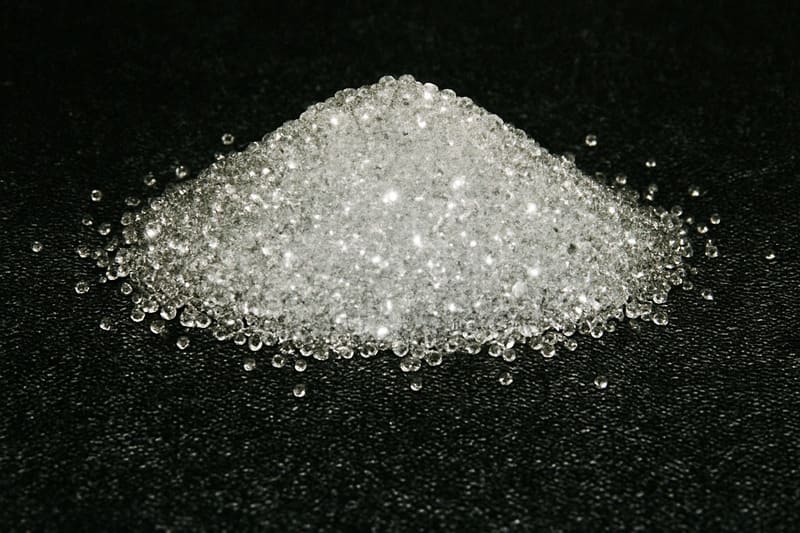
1. Blasting Media
The type of bead media determines the texture and cleaning aggressiveness.
| Media Type | Material | Typical Application |
|---|---|---|
| Glass Beads | Soda-lime glass | General-purpose matte finishing, cosmetic prep |
| Ceramic Beads | Zirconia-based | High-durability cleaning of steel and titanium |
| Plastic Beads | Polycarbonate or acrylic | Gentle finishing of plastics and sensitive parts |
Pro Tip: Smaller bead sizes deliver finer finishes. Coarser beads clean faster but create a rougher texture.
2. Propulsion Method
This is the force that drives the beads against the workpiece.
- Compressed Air: Common in CNC shops for manual control and precision work.
- Wheel Blasting: Used in automated systems for high-volume, continuous blasting. Beads are flung using centrifugal force.
Adjusting pressure (typically 40–90 psi) allows for tuning aggressiveness without damaging the part.
3. Blasting Equipment
Choosing the right system is key to safety and repeatability.
- Enclosed Cabinets: Ideal for small-to-medium parts, with operator hand-access and recycling media system.
- Automated Blast Rooms: Handle large or batch jobs with conveyor systems and robotic nozzles.
Most systems include dust extraction and bead recirculation, ensuring consistent pressure and minimal waste.
4. Surface Impact
This is where the work happens—the bead strikes the part, causing micro-level abrasion that cleans and textures the surface.
The impact:
- Removes burrs, oxide layers, and grease
- Relieves stress in machined or welded parts
- Prepares the surface for coating or bonding
Reminder: The distance between nozzle and part (typically 4–8 inches) and angle of attack (45° recommended) significantly influence finish quality and consistency.
What Does a Standard Bead Blasting Workflow Look Like?
Many projects fail because process steps are skipped or rushed—here’s how we standardize for consistency.
At Onlyindustries, our bead blasting workflow follows a precise routine to ensure surface quality every time, especially for high-tolerance CNC components.
Step-by-Step Breakdown
- Part Inspection: We inspect incoming parts for surface flaws, contamination, or critical zones requiring masking.
- Masking: Threads, bores, and tight-fit features are masked with custom silicone plugs or tapes.
- Media Setup: Based on part material and finish goal, we load the appropriate bead type and pressure setting.
- Blasting: Technicians maintain a consistent nozzle distance and sweeping motion to avoid streaks or over-blasting.
- Cleaning: Parts undergo compressed air or ultrasonic cleaning to remove embedded beads or dust.
- Post-Inspection: We verify the finish meets texture and appearance specs before packaging.
Real Example
For a U.S. medical device company, we used ultra-fine glass beads and low pressure to achieve a 1.6 µm Ra matte finish on titanium surgical tools. This ensured biocompatibility and passivation-readiness, while preserving the critical cutting geometry.
How Do You Control Quality in Bead Blasting?
Bead blasting can be inconsistent if process variables aren’t tightly controlled—especially in batch production.
Quality assurance involves maintaining media purity, monitoring equipment settings, and training operators. Even subtle changes in nozzle wear or bead degradation can create inconsistent finishes across parts.
Key QA Measures We Use
- Change media after every 10–15 cycles to prevent finish dulling
- Use surface profile gauges to check Ra post-blasting
- Log and calibrate blast pressure weekly
- Use visual samples as reference standards for cosmetic consistency
Our engineers are trained to spot early warning signs of media breakdown, contamination, or equipment fatigue—ensuring you get uniform results across every batch.
Conclusion
The bead blasting process is a calibrated sequence of media selection, pressure control, and surface interaction—mastering it ensures repeatable, high-quality finishes.
Compatible Materials for Bead Blasting
Choosing the wrong material for bead blasting can result in warping, poor surface quality, or even part failure—material compatibility matters.
Bead blasting is compatible with a wide range of metals, plastics, and composites, but each material requires specific settings for pressure, media type, and process control. Understanding how each responds to blasting ensures the finish is both functional and safe.
In this section, I’ll detail which materials work best for bead blasting, how to tailor the process for each, and what pitfalls to avoid to ensure finish integrity and component longevity.
Which Metals Are Most Suitable for Bead Blasting?
Metals respond well to bead blasting, but each has its own tolerances for pressure and media impact.
Bead blasting is commonly used to finish metal surfaces by removing oxidation, scale, machining marks, and fine burrs. However, different metals react differently depending on their hardness and structural properties. Aluminum, for instance, is prone to denting under high pressure, while stainless steel can handle aggressive cleaning without distortion.
Compatible Metals and Their Considerations
| Metal | Process Notes | Recommended Media |
|---|---|---|
| Aluminum | Use low pressure to prevent pitting or distortion; commonly used in anodizing prep | Fine glass beads (low PSI) |
| Stainless Steel | Handles moderate to high pressure; ideal for surface stress relief and cosmetic finishing | Glass or ceramic beads |
| Titanium | Use for medical and aerospace applications; uniform matte finish aids coating adhesion | Ceramic beads |
| Brass / Copper | Highly malleable; use gentle blasting to avoid deformation or over-matting | Plastic or fine glass beads |
| Magnesium | Corrosion-prone; ensure post-cleaning is thorough to remove trapped media | Fine glass beads (carefully cleaned) |
Pro Tip
For parts requiring post-process anodizing or passivation, we always recommend bead blasting as a surface prep step. It improves coating adhesion and creates a visually uniform finish—especially on aluminum housings and stainless fasteners.

Can Plastics Be Safely Bead Blasted?
Plastics are compatible with bead blasting—but only under carefully controlled conditions.
Many thermoplastics can be safely bead blasted to remove flash, clean residues, or add surface texture. However, because plastics are soft and heat-sensitive, pressure, media type, and exposure time must be strictly controlled to prevent warping or abrasion damage.
Plastic Materials That Work
- ABS: Common in enclosures; allows light texturing at low pressure
- Polycarbonate: Strong but heat-sensitive; needs short, precise blasts
- PEEK: Medical-grade or aerospace-grade plastic; requires plastic media and very low PSI
- Acrylic: Can be blasted but is prone to micro-cracking if overexposed
Best Practices for Plastics
- Use plastic or ultrafine glass beads only
- Set pressure to under 30 PSI to prevent warping
- Limit exposure time—short pulses prevent overheating
Reminder: We always run a test cycle on plastic prototypes to fine-tune parameters before blasting the full batch. This helps avoid costly rework or cosmetic inconsistencies.
Is Bead Blasting Compatible with Ceramics and Composites?
Ceramics and composites can be bead blasted, but the process must be tuned for fragility and surface integrity.
When applied properly, bead blasting can clean and texture ceramic or composite components used in electronics, medical, or aerospace applications. These materials often require surface conditioning before bonding, coating, or laser marking.
Material Considerations
| Material | Use Case | Process Notes |
|---|---|---|
| Technical Ceramics (e.g., Alumina) | Used in medical and electronics | Requires low-impact media like plastic or ultrafine glass |
| Fiber-Reinforced Composites | Aerospace panels, robotic arms | Use indirect or light sweeping passes to avoid fiber exposure |
| Glass Components | Optical covers, instrument panels | Bead blast gently for anti-glare texturing |
Key Consideration
Composite parts often include mixed material zones—resin, metal inserts, fibers. We recommend segmenting blast areas with masking tape to protect soft spots while refining stronger surfaces.
What Materials Should You Avoid in Bead Blasting?
Some materials are too soft, reactive, or fragile for bead blasting without special precautions.
Even though bead blasting is gentler than sandblasting, it’s not universally safe. Poor material compatibility can lead to pitting, discoloration, or functional failure—especially in close-tolerance applications.
High-Risk Materials
- Lead or Tin Alloys: Too soft; can smear under pressure
- Zinc: Reacts poorly to abrasion; prone to white rust if not sealed after blasting
- Delicate Optical Plastics: Can haze or microfracture
- Rubber or Elastomers: Too flexible and energy-absorbent for abrasive treatment
If your part falls into any of these categories, we’ll recommend alternative finishing techniques—like vapor honing, chemical cleaning, or vibratory tumbling—to achieve similar outcomes safely.
Conclusion
Bead blasting is highly versatile—but only when tailored to the unique properties of your chosen material.r soft substrates like aluminum or plastic to prevent deformation.
Industrial Applications of Bead Blasting
Choosing the right finishing method for your industry can improve performance, aesthetics, and customer satisfaction—bead blasting does all three.
Bead blasting is widely applied across multiple industries, including automotive, aerospace, medical, consumer electronics, and general manufacturing. Its ability to clean, deburr, and texture surfaces without damaging the part makes it a go-to finishing method for engineers and product developers.
In this section, I’ll break down the specific ways different industries use bead blasting—from prepping aerospace brackets to finishing medical implants—and explain why it’s the preferred choice for many functional and aesthetic needs.
How Is Bead Blasting Used in the Automotive Industry?
In automotive manufacturing, bead blasting helps clean parts, prepare surfaces for coatings, and extend component life under harsh conditions.
Automotive components face high temperatures, vibration, and environmental exposure. Bead blasting provides a clean, uniform finish that enhances coating adhesion and removes oil residues or scale left from casting and machining. This makes it a vital step for both internal engine parts and visible structural components.
Typical Automotive Applications
- Engine Components: Cleaning cylinder heads, pistons, and manifolds before coating
- Transmission Parts: Prepping gear housings and clutch covers for assembly
- Suspension Systems: Removing burrs and scale from control arms and brackets
- Brake System Parts: Surface prepping calipers or drums before powder coating
At Onlyindustries, we provide consistent blasting finishes that meet OEM standards, and we offer in-line masking for mating surfaces that must remain unaltered for tight fitment.
What Role Does Bead Blasting Play in Aerospace Manufacturing?
Precision, cleanliness, and fatigue resistance are critical in aerospace—bead blasting delivers on all three.
Aerospace components demand extreme reliability. Bead blasting is used to clean and texture critical parts without compromising their dimensional stability. It’s also known to reduce residual stress from machining or welding, which helps increase part lifespan in high-vibration environments.
Aerospace Use Cases
- Turbine Blades: Deburring and stress-relieving surfaces before coating
- Landing Gear Components: Cleaning and matte finishing for crack visibility
- Airframe Brackets: Surface preparation before anodizing or painting
- Aluminum Panels: Removing oxidation and preparing for chemical conversion coating
We’ve worked with aerospace suppliers who require controlled Ra values, and we tune bead size and pressure to match exact surface roughness specs without damaging lightweight alloys.
Why Is Bead Blasting Common in the Medical Industry?
Medical devices need a matte finish that’s clean, safe, and ideal for further sterilization—bead blasting is the trusted method for that.
In the medical field, matte surfaces are preferred to reduce glare and improve grip. Bead blasting also removes micro-burrs and machining residues that could otherwise harbor bacteria. The result is a clean, uniform finish that supports coating, passivation, or anodizing without affecting geometry.
Medical Device Applications
- Orthopedic Implants: Matte finishing for joint components and bone plates
- Surgical Instruments: Cleaning and micro-texturing stainless steel tools
- Diagnostic Equipment Frames: Cosmetic finishing for aluminum and plastic covers
- Dental Tools: Texturing for improved sterilization and usability

Our team is trained to meet tight Ra specs required for Class I and II medical devices. We also provide traceable bead lot certifications and post-process ultrasonic cleaning as part of our service package.
How Is Bead Blasting Applied in Consumer Electronics?
In electronics, appearance is everything—bead blasting ensures a sleek, consistent finish that meets user expectations.
From smartphones to audio equipment, bead blasting is used to create a high-end matte finish on anodized aluminum and plastic components. The process also improves the tactile feel of buttons, knobs, and housings, enhancing user interaction and product value.
Electronics Finishing Examples
- Device Housings: Matte texture for smartphones, laptops, and wearables
- Control Knobs and Bezels: Cosmetic finishing for a uniform aesthetic
- Speaker Grilles and Casings: Prep for anodizing and branding
- Mounting Brackets: Functional parts with clean surface for assembly
We’ve helped clients reduce post-anodizing rejection rates by ensuring the surface is evenly textured and free from oil contamination before the finishing bath.
What Are the General Manufacturing Benefits of Bead Blasting?
For general fabrication and industrial components, bead blasting is a quick and effective way to clean, deburr, and prepare parts for downstream processing.
Whether you’re building machine frames, custom jigs, or enclosures, bead blasting ensures surfaces are uniform and contaminant-free. It’s especially useful before painting, powder coating, or adhesive bonding where surface prep determines success.
Common Manufacturing Applications
- Welded Assemblies: Removing discoloration and stress from heat zones
- Structural Brackets: Smoothing sharp edges for safer handling
- Custom Fixtures: Deburring and refining complex internal corners
- Machine Enclosures: Prepping for powder coating or branding
At Onlyindustries, we integrate bead blasting into our full part flow—from CNC machining to final packaging—ensuring no skipped steps or finish inconsistency across high-mix batches.
Conclusion
Bead blasting is a flexible, high-precision finishing process trusted across industries—from aerospace and automotive to medical and electronics.
Key Benefits of Bead Blasting
Not all finishing methods deliver both form and function—bead blasting gives you both, without compromising tolerances.
Bead blasting offers a wide range of benefits for manufacturers and engineers: from enhancing aesthetics to improving coating adhesion and maintaining dimensional integrity. It’s one of the few surface treatments that balances cosmetic appeal with critical performance enhancements.
In this section, I’ll unpack the key advantages of bead blasting and explain why it remains a go-to finishing solution for precision parts across medical, aerospace, electronics, and industrial sectors.
How Does Bead Blasting Improve Surface Uniformity?
Uneven finishes can make parts look cheap and cause coating issues—bead blasting solves both problems at once.
One of the primary reasons to choose bead blasting is to achieve a consistent, matte texture across a part’s surface. Whether your part is aluminum, titanium, or polycarbonate, bead blasting eliminates machining marks, micro-burrs, and tool paths that would otherwise create aesthetic or functional issues.
Why Uniformity Matters
- Cosmetic Appeal: Creates a clean, premium look on visible components
- Functional Consistency: Prepares surface evenly for coatings like anodizing or painting
- Tactile Quality: Smooth and non-reflective finish ideal for consumer products and surgical tools
At Onlyindustries, we calibrate bead size, pressure, and nozzle motion to guarantee every part has the same texture, even in high-mix, low-volume production runs.
What Makes Bead Blasting Ideal for Surface Cleaning?
Residues like oil, oxidation, and machining dust weaken coatings and can trigger contamination—bead blasting removes all of them efficiently.
Bead blasting is an excellent pre-treatment method to clean parts before subsequent finishing or assembly. It effectively strips off grease, oxidation, and metal flakes without damaging the base material, making it safer than harsh chemical degreasers or more aggressive abrasives like sand.
Cleaning Advantages
- No Harsh Chemicals: Environmentally friendly alternative to chemical cleaning
- Oxide Layer Removal: Ensures better contact for welding or bonding
- Safe on Sensitive Materials: Even plastic and aluminum can be cleaned at low pressure
We often combine bead blasting with ultrasonic cleaning for medical and aerospace components, ensuring both visual and microscopic cleanliness.
Does Bead Blasting Protect Dimensional Integrity?
Unlike sanding or polishing, bead blasting smooths surfaces without rounding edges or altering part geometry.
Bead blasting is non-destructive and maintains tight tolerances, which is critical in industries where part fit, alignment, and surface flatness directly affect performance. Since the beads only impact the surface microscopically, there’s virtually no measurable material removal.
Dimensional Benefits
- Minimal Material Loss: Ideal for CNC precision components and machined threads
- No Edge Rounding: Maintains sharp corners where design requires them
- Safe for Close-Fit Assemblies: No post-process resizing or re-machining needed

For one client producing medical bone screws, we were able to achieve a clean matte finish while maintaining thread pitch and root diameter to within ±0.01mm—eliminating the need for rework.
How Does Bead Blasting Prepare Surfaces for Coating?
A bad finish underneath will ruin even the best coating—bead blasting creates the perfect base.
Whether you’re applying anodizing, powder coating, paint, or adhesive, the surface needs to be roughened just enough for mechanical adhesion—without introducing deep scratches. Bead blasting offers that optimal balance, creating a micro-textured surface that improves coating durability and uniformity.
Preparation Advantages
- Increased Bond Strength: Coatings adhere better to uniform, textured surfaces
- No Residual Contaminants: Eliminates oils and oxides that would disrupt coating application
- Improves Coating Appearance: Prevents visual defects like orange peel or fisheyes
We’ve reduced anodizing failure rates for several electronics clients by pre-blasting aluminum parts with fine glass beads—creating a finish that’s both cosmetic and performance-ready.
What Are the Operational and Environmental Benefits?
Bead blasting isn’t just effective—it’s efficient, sustainable, and cost-friendly.
Unlike single-use abrasives or solvent-based cleaners, bead blasting media can be reused multiple times. Glass beads, in particular, are recyclable and create less dust than alternatives like aluminum oxide. This reduces waste, lowers costs, and creates a cleaner, safer work environment for operators.
Efficiency and Sustainability
- Media Reusability: Glass beads can be reused 30–40 times depending on pressure and contamination level
- Low Waste Output: Minimal dust and no chemical runoff
- Quick Setup: Faster than chemical prep or multi-step polishing
Our clients appreciate how bead blasting fits into lean workflows—it’s quick, repeatable, and integrates easily into automated or manual finishing stations.
Conclusion
Bead blasting delivers unmatched consistency, cleanliness, and dimensional safety—making it a powerful, all-in-one finishing solution for high-performance parts.
Limitations and Considerations
Every finishing method has trade-offs—bead blasting is no exception, and knowing its limits can save you costly mistakes.
While bead blasting offers exceptional surface finishing for a wide range of applications, it also presents some limitations related to part design, material sensitivity, process speed, and cleanliness. Understanding these limitations helps you determine if bead blasting is the right method—or if an alternative process is better suited.

In this section, I’ll walk through the most critical limitations and offer guidance on how to navigate them when planning or outsourcing bead blasting for your projects.
What Is Media Entrapment and Why Is It a Concern?
If blasting media gets stuck inside your parts, it can lead to malfunctions, contamination, or costly rework.
Bead blasting involves shooting fine media at a part’s surface. While effective for cleaning and smoothing, this process can cause beads to lodge in threaded holes, internal channels, or deep cavities—especially in complex geometries. If not thoroughly cleaned post-process, trapped media can damage tooling, affect assembly fit, or release debris during use.
Common Risk Zones
- Internal threads and blind holes
- Heat sink fins or cooling channels
- Deep counterbores or internal recesses
How I Address It
At Onlyindustries, we implement a three-step control method:
- Use of masking plugs and caps for all threaded or sensitive features
- Post-blast air purge followed by ultrasonic cleaning
- Final inspection using borescopes or inspection pins to confirm clearance
Tip: If your part contains fluid or airflow paths, always alert your supplier in advance so they can apply targeted protection during blasting.
How Do Surface Consistency Issues Occur?
Inconsistent blasting motion or worn media can result in a blotchy or uneven finish—hurting both appearance and performance.
Bead blasting depends heavily on operator skill or machine calibration. Factors such as nozzle speed, bead degradation, and inconsistent pressure can cause banding, streaks, or visible patches. These issues are especially noticeable on cosmetic parts like anodized enclosures or consumer-facing housings.
Causes of Inconsistency
- Operator fatigue or inconsistent hand movement
- Improper nozzle angle or distance
- Use of over-worn or contaminated media
Prevention Strategy
- Use rotary fixtures or automated nozzles for high-end cosmetic parts
- Train operators on sweep timing and overlap zones
- Log media life cycles and replace after set hours or cycles
We’ve reduced surface variation complaints by implementing controlled blast cycles with CNC-timed nozzle movement for all large-batch enclosures.
Why Should Bead Blasting Be Avoided for Tight-Fit Surfaces?
Even minimal surface alteration can interfere with fit in high-tolerance assemblies—especially on shafts, threads, or bore interfaces.
Though bead blasting removes very little material, it can still create enough texture to interfere with precision fits. Areas with sliding or threaded engagements may develop increased friction, reduced clearance, or galling—leading to functional issues in mechanical assemblies.
Examples of At-Risk Features
- Press-fit bearing seats
- Shaft journals and piston rods
- Threaded studs or tapped holes
Best Practice
Mask all tolerance-critical zones prior to blasting. We use silicone caps, precision die-cut films, or custom 3D-printed shields to protect key surfaces. For mating parts, we always verify dimensional integrity post-blast using calibrated gauges.
Note: When parts require post-blast coating, a slightly rougher surface may be acceptable—just ensure the finish aligns with final dimensional specs.
How Does Bead Blasting Affect Throughput and Lead Time?
Bead blasting is not a high-speed finishing method—it’s slower than tumbling, polishing, or chemical cleaning.
Because each part must be blasted with consistent coverage and care, bead blasting tends to have lower throughput compared to batch processes like vibratory finishing. This can become a bottleneck in large-volume production, especially if automated systems are not in place.
Throughput Limitations
- Manual blasting is time-consuming, especially for detailed parts
- Cycle times increase with masking and cleaning requirements
- Media recovery and filtration take time between batches
When It Works Best
- Low-to-medium volume, high-value components
- Precision or cosmetic parts where quality outweighs speed
- Pre-coating or post-machining steps in a lean workflow
For large-scale projects, we often integrate dual-nozzle automated systems or parallel operator stations to increase daily throughput without compromising quality.
Is Post-Blast Cleaning Always Required?
Yes—residual beads and dust can compromise part cleanliness and downstream coatings if not removed.
Even after blasting, residual beads or dust particles can cling to the part surface, especially if static buildup occurs. These contaminants can cause adhesion issues for paint or anodizing, introduce foreign matter into assemblies, or even contaminate cleanroom environments.
Cleaning Recommendations
- Compressed Air Blow-Off: Quick but only removes loose dust
- Ultrasonic Cleaning: Ideal for complex or internal cavities
- Solvent Rinse: Helps neutralize static and remove oils simultaneously
For medical and aerospace customers, we always follow bead blasting with a Class 10,000 cleanroom ultrasonic rinse using deionized water—meeting even the most stringent cleanliness standards.
Conclusion
Bead blasting offers unmatched surface finishing control—but it requires proper planning to avoid issues with media entrapment, tolerance interference, or process delays.
Surface Roughness (Ra) by Media Type
A great-looking finish isn’t enough—if the surface roughness is off, your coatings, seals, or mechanical interfaces may fail.
Surface roughness (Ra) is a critical parameter in bead blasting, especially for applications requiring coating adhesion, friction control, or visual consistency. Ra values vary depending on bead media type, pressure, nozzle setup, and base material—making it essential to select the right combination for your desired finish quality.
In this section, I’ll explain how different media types influence Ra values and show how to match the right finish to your functional or aesthetic needs.
What Is Ra and Why Does It Matter?
Ra (Roughness Average) measures the microscopic peaks and valleys on a surface—too rough or too smooth can both create problems.

Measured in micrometers (µm), Ra is the most common indicator of surface texture. It impacts everything from paint adhesion to fluid sealing and is often specified on technical drawings. Bead blasting provides a controlled way to achieve target Ra values—but only if media and parameters are properly matched.
Ra in Real-World Applications
- Medical Implants: Require smooth Ra (~1.6 µm) to ensure biocompatibility
- Aerospace Parts: Need consistent Ra to prevent fatigue cracks and aid bonding
- Anodized Electronics: Matte finishes must fall between 1.6 – 3.2 µm for uniform dye penetration
How Do Different Media Types Affect Ra?
Each blasting media type produces a unique surface texture—choosing the wrong one can ruin a finish or make coatings fail.
The size, hardness, and shape of the blasting media determine how much surface material is impacted. Harder, coarser beads create deeper indentations (higher Ra), while smaller, softer beads result in smoother finishes. The key is balancing the media with your surface requirements.
Surface Roughness Comparison by Media Type
| Media Type | Typical Ra (µm) | Finish Description | Best Use Cases |
|---|---|---|---|
| Fine Glass Beads | 1.6 – 3.2 | Smooth matte, uniform | Electronics housings, anodizing prep, surgical tools |
| Coarse Ceramic Beads | 3.2 – 6.3 | Rougher matte, higher microtexture | Titanium aerospace parts, weld cleaning |
| Plastic Media | < 1.6 | Very soft texture | Plastics, delicate parts, medical-grade polymers |
| Crushed Glass | 6.3 – 9.5 | Sharp and aggressive | Heavy cleaning, rust removal, non-cosmetic parts |
Note: Actual Ra results also depend on air pressure, nozzle angle, standoff distance, and substrate hardness.
How Can You Control Ra More Precisely?
Consistency in Ra is essential for high-precision parts—this comes from equipment setup, not guesswork.
At Onlyindustries, we control Ra values by pre-testing combinations of media, pressure, and dwell time on sample coupons. We then lock the parameters for repeatability and verify Ra using surface profilometers or comparative visual standards.
Process Controls We Use
- Maintain bead quality by replacing media every 30–40 cycles
- Keep consistent nozzle angle (usually 45°) and distance (4–8 inches)
- Use calibrated profilometers to verify Ra after each setup change
We also maintain finish sample panels for customers who require visual references in addition to metrology. This is especially helpful for cosmetic components where texture and sheen consistency are critical.
How to Match Ra to Your Application?
There’s no “one-size-fits-all” Ra. The right value depends entirely on what the part will do next.
| Target Ra (µm) | Application | Recommended Media |
|---|---|---|
| 0.8 – 1.6 | Medical implants, sealing surfaces, optical components | Plastic or ultrafine glass beads |
| 1.6 – 3.2 | Anodizing prep, electronics housings, surgical tools | Fine glass beads |
| 3.2 – 6.3 | Bonding prep, weld cleanup, powder coating base | Ceramic or coarse glass beads |
| 6.3 – 9.5+ | Heavy rust removal, casting cleanup | Crushed glass or aluminum oxide (not ideal for tight tolerance parts) |
Final Tip
If your part has a spec’d Ra, always communicate that with your supplier early. Ra targets are not always visually obvious, and even “matte” finishes vary widely in roughness. At Onlyindustries, we validate every Ra-critical job with profilometry and documentation before shipping.
Conclusion
Surface roughness (Ra) is the measurable science behind the bead-blasted finish—getting it right means better performance, longer wear, and fewer rejections.material hardness.
Expert Tips for Effective Bead Blasting
Bead blasting may seem simple—but without the right techniques, you risk inconsistent finishes, trapped media, or even damaged parts.
Even experienced fabricators can overlook key factors that impact bead blasting results. The right nozzle control, media choice, masking, and maintenance procedures can make the difference between a professional-grade finish and a costly rework.
In this section, I’ll share tried-and-true tips from my years of working with aerospace, medical, and industrial OEMs—helping you ensure smooth, consistent, and trouble-free bead blasting operations every time.
Why Does Bead Size Matter So Much?
The size of your bead media directly determines surface texture—bigger isn’t always better.
Smaller beads create a finer, smoother finish that’s ideal for cosmetic parts or pre-anodizing prep. Larger beads increase aggressiveness and surface roughness, which is useful for weld cleanup or prepping for bonding. Selecting the right size ensures you achieve the desired Ra (surface roughness) without damaging the part.
Rule of Thumb
- Small beads (70–100 mesh): Fine satin finish for cosmetic or medical parts
- Medium beads (40–60 mesh): General-purpose matte finish with light texturing
- Large beads (20–30 mesh): Aggressive cleaning or scale removal
Tip: Always start with the finest bead possible for the job. You can increase aggressiveness if needed, but over-texturing is difficult to reverse.
What’s the Ideal Nozzle Distance and Angle?
Incorrect nozzle positioning causes streaks, inconsistent finish, and inefficient blasting.
For best results, maintain a consistent nozzle distance of 4–8 inches from the workpiece and aim the nozzle at a 45° angle. This angle maximizes coverage while minimizing the risk of bouncing media damaging adjacent features. Avoid blasting directly head-on unless targeting a narrow cavity.
Common Mistakes to Avoid
- Holding the nozzle too close (under 2″)—may dent soft metals like aluminum
- Blasting too far (over 10″)—reduces media velocity and cleaning efficiency
- Changing angles mid-blast—leads to visible streaks or shadowing
For batch processing, we use fixture jigs or robotic nozzles to ensure repeatability. Manual blasting should follow consistent sweeping patterns, overlapping by 50% with each pass.
How Should You Rotate or Fixture the Part?
Inconsistent exposure creates uneven finishes—rotating the part ensures uniformity.
Unless the part is perfectly flat, bead blasting requires multi-angle coverage. Rotating the part (or using a rotating table) allows for full surface exposure. Fixtures hold parts at the correct orientation to eliminate missed spots, especially for cylindrical or asymmetric components.
Our Approach
- Use manual turntables for small batches or prototypes
- Set up rotating jigs for cylindrical or round parts
- Blast in crosshatch patterns (horizontal and vertical) for large flat surfaces
For a recent job involving aerospace brackets with deep channels, we used a programmable rotary clamp to expose all critical surfaces evenly—ensuring no coating adhesion issues post-blast.
Why Should Media Be Replaced Regularly?
Worn or contaminated beads cause inconsistent results, dust buildup, and finish degradation.
Media breaks down with each use, becoming finer and more powdery. This reduces cutting ability and creates finish inconsistencies. In addition, dirty media can embed foreign particles into the part—especially risky for medical or food-grade components.
Media Maintenance Tips
- Replace media every 30–40 cycles or when finish begins to dull
- Install magnetic separators to remove metal contaminants
- Clean the blast cabinet weekly and purge filters monthly
We track media performance by logging hours of use and conducting visual inspections. For regulated industries, we provide bead lot certifications and change logs to ensure traceability.
Why Is Masking Critical for Precision Parts?
Unmasked threads, bores, and contact surfaces can be damaged or rendered unusable by bead blasting.

Beads can dull threads, increase mating friction, or create interference fits if blasted directly onto tolerance-critical features. Masking protects these zones and ensures dimensional integrity throughout the process.
Best Masking Materials
- Silicone caps and plugs (reusable and heat-resistant)
- Vinyl tape for flat surfaces and low-profile features
- 3D-printed shielding jigs for high-value or complex parts
Tip: For production runs, we design reusable masking kits customized to the part geometry—cutting prep time and improving consistency.
Conclusion
Expert-level bead blasting comes down to control, consistency, and cleanliness—follow these tips, and you’ll achieve flawless finishes every time.
Bead Blasting vs Other Finishing Methods
Choosing the wrong finishing method can ruin your parts, waste your budget, and delay your project—bead blasting isn’t always the best fit, but it often is.
Bead blasting is just one of many surface finishing options available. Understanding how it compares to other methods—like sandblasting, polishing, tumbling, or anodizing—helps you choose the right process based on your project’s functional, cosmetic, and cost requirements.
In this section, I’ll break down the differences between bead blasting and other common finishing techniques and explain when (and why) bead blasting is the smarter choice.
How Does Bead Blasting Compare to Sandblasting?
Sandblasting is aggressive and fast—but not ideal when precision matters.
Both processes use abrasive media, but sandblasting is harsher and often used for heavy-duty cleaning. Bead blasting, on the other hand, is more refined—ideal for preserving fine details and achieving a satin finish without excessive material removal.

Bead Blasting vs Sandblasting
| Criteria | Bead Blasting | Sandblasting |
|---|---|---|
| Surface Finish | Matte / Satin | Rough / Gritty |
| Material Removal | Minimal | Moderate to High |
| Ideal For | Cosmetic or precision components | Heavy rust or paint removal |
| Dimensional Control | Excellent | Poor |
Verdict: Use bead blasting for tight-tolerance or cosmetic parts. Sandblasting is better suited for prepping structural steel or cleaning old castings.
Is Bead Blasting Better Than Polishing?
If you’re after a glossy, mirror-like finish, bead blasting won’t get you there—but it will save your tolerances.
Polishing is ideal for decorative or reflective surfaces, but it can round edges, remove material, and require manual labor or multi-step processes. Bead blasting creates a matte surface quickly, with uniform texture and no dimensional loss—perfect for functional aesthetics or coating prep.
Bead Blasting vs Polishing
| Criteria | Bead Blasting | Polishing |
|---|---|---|
| Finish | Matte / Satin | Glossy / Reflective |
| Speed | Fast (minutes) | Slow (multi-step) |
| Material Removal | Negligible | Moderate |
| Ideal For | Precision parts, prep for coating | Show surfaces, luxury products |
Verdict: Choose bead blasting when function and consistency matter more than reflectivity.
How Does Bead Blasting Stack Up Against Tumbling?
Tumbling is great for volume—but lacks precision and uniformity on complex geometries.
Vibratory or barrel tumbling is a bulk finishing method, often used to deburr or smooth edges on hundreds of parts at once. However, it’s limited to simple shapes and offers little control over surface finish. Bead blasting, by contrast, allows detailed targeting and consistent results—even on complex or delicate parts.
Bead Blasting vs Tumbling
| Criteria | Bead Blasting | Tumbling |
|---|---|---|
| Control | High (manual or automated) | Low (bulk process) |
| Finish Consistency | Excellent | Variable |
| Volume Efficiency | Moderate | High |
| Best Use | Precision or cosmetic parts | Bulk deburring of simple parts |
Verdict: Use tumbling for bulk edge deburring; use bead blasting for uniform finishes or complex geometries.
Can Bead Blasting Replace Anodizing?
No—bead blasting and anodizing aren’t interchangeable. But they work perfectly together.
Anodizing is an electrochemical process that enhances corrosion resistance and appearance—especially for aluminum. However, it requires proper surface prep. Bead blasting creates the ideal matte base for anodizing, helping dye colors look uniform and preventing coating defects.
Bead Blasting vs Anodizing
| Criteria | Bead Blasting | Anodizing |
|---|---|---|
| Function | Clean and texture the surface | Add protective oxide coating |
| Finish | Matte / Satin | Colored / Glossy / Matte |
| Material Removal | Negligible | N/A (adds oxide layer) |
| Role | Pre-treatment step | Final coating process |
Verdict: Combine both. Bead blasting improves anodizing results by ensuring even absorption and uniform appearance.
When Should You Choose Bead Blasting Over Other Methods?
If you need a uniform matte finish, dimensional control, and high repeatability—bead blasting is your best bet.
Choose Bead Blasting When:
- You want a consistent satin finish on cosmetic or critical parts
- Your parts must maintain tight tolerances
- You need to prep parts for anodizing, painting, or coating
- You work with sensitive metals or plastics
- You need a finish free from streaks or discoloration
At Onlyindustries, we guide customers through this decision process during the quote stage—recommending the ideal finishing sequence based on your drawings, Ra targets, and downstream requirements.
Conclusion
Bead blasting isn’t the only surface finishing method—but it’s often the most versatile, especially when you need controlled texture, uniform results, and preserved tolerances.
Conclusion
Bead blasting offers a rare balance of cosmetic quality and functional precision—when done right, it elevates both the performance and appearance of your parts.
From aerospace brackets to medical implants and consumer electronics housings, bead blasting delivers uniform, matte finishes while preserving critical tolerances. It’s ideal for removing oxidation, preparing for coatings, or simply improving part aesthetics—without compromising structural integrity.
However, success depends on understanding the process variables: media type, pressure, nozzle control, surface masking, and post-cleaning. By tailoring these elements to your material and application, you gain full control over surface roughness, adhesion properties, and visual consistency.
At Onlyindustries, we’ve refined this process across thousands of projects. We help our customers—like Mark Wilson and other importers, distributors, and OEMs—achieve finish consistency, avoid costly rework, and speed up production readiness. Whether you need prototyping support or full-scale finishing for high-volume parts, we’re ready to help.
Need help selecting the right bead blasting setup?
Get in touch with our engineering team today and request a custom quote tailored to your application and finish requirements.