Skip to content
Tired of corrosion, poor aesthetics, or premature wear in your metal parts? Learn how the right surface finish delivers lasting protection and performance.
Metal surface finishing refers to treatments applied post-machining that enhance corrosion resistance, wear performance, and appearance across industries.
From aerospace shafts to medical implants, choosing the most effective finish ensures your parts not only meet spec—but outperform in service.
What Is Metal Surface Finishing?
Worried your parts don’t last or look premium? I’ll show you how surface finishing transforms raw metal into high-performance, durable, and visually appealing components.
Metal surface finishing refers to secondary processes applied to a machined or formed metal part that enhance its corrosion resistance, wear life, friction performance, cleanliness, or visual appeal.

Dive Deeper: The Role and Impact of Surface Finishing
1. Corrosion & Oxidation Prevention
Metal parts often encounter moisture, chemicals, or physiological environments that cause rust or breakdown. Finishes like anodizing, electroless plating, or chemical passivation form protective surface layers that significantly extend service life.
2. Wear Resistance & Hardness Enhancement
In moving assemblies, gear teeth, or sliding components, untreated metal surfaces wear quickly. Mechanical finishes like grinding or coatings such as hard chrome and nitriding build wear-resistant surfaces that reduce abrasion and maintain dimensional accuracy.
3. Friction Reduction
Smooth finishes, achieved through polishing or low-friction coatings like PTFE, minimize resistance in dynamic contacts. This improves energy efficiency and reduces heat generation in machinery.
4. Adhesion & Functional Coatings Prep
Some parts require further coatings or adhesives. Processes such as blast-cleaning and phosphating ensure these layers bond uniformly, preventing peeling or delamination under stress.
5. Biocompatibility & Cleanability
In medical and food applications, surface imperfections can harbor bacteria or trigger adverse reactions. Electropolishing and passivation remove burrs and create smooth, cleanable, non-reactive surfaces compliant with sterilization standards.
6. Visual & Brand Enhancement
Cosmetic finishes—like polished, matte, anodized colors, or decorative plating—elevate product aesthetics and reinforce brand identity, while also concealing machining marks or tool paths.
In practice, after CNC machining or forming, surface finishing is the bridge between a functional part and a high-performing, service-ready component.
Common Surface Finishing Processes
Worried your component won’t meet performance or aesthetic requirements? Let’s dive into the finishing methods that turn raw metal into durable, high-quality parts.
Surface finishing includes several categories—mechanical, chemical, electrochemical, conversion coatings, and paints/coatings—each tailored to specific performance goals and material types.
Dive Deeper: Detailed Breakdown of Finishing Methods
1. Mechanical Finishing
Mechanical finishing relies on physical abrasion to refine surface geometry and appearance:
- Grinding: Removes material precisely to improve flatness and maintain tolerances—ideal for gear faces, shafts, and high-precision parts.
- Polishing: Buffs surfaces to a smooth, semi-bright finish—commonly used for medical instruments and consumer products.
- Buffing: Delivers a mirror-like surface that enhances appearance and reduces friction in visible components.
- Blasting: Uses sand, beads, or shot to clean, texture, or prepare surfaces for coating. Effective on complex geometries and weld zones.
These methods are cost-effective for removing burrs, achieving tight tolerances, and preparing a part for subsequent treatments.
2. Chemical Finishing
Chemical processes alter surface chemistry to improve corrosion resistance and cleanliness:
- Pickling: Uses acid baths to eliminate oxides and scale—commonly applied to stainless steel and carbon steel components.
- Passivation: Enhances the natural oxide layer on stainless steel to increase durability and prevent rust in surgeries and food processing.
- Electropolishing: Removes micro-peaks via controlled anodic dissolution, resulting in ultra-smooth, cleanable surfaces—ideal for medical implants.
These methods ensure components are sterile, corrosion-resistant, and compliant with hygiene standards.
3. Electrochemical Finishing
Electrochemical treatments deposit or modify surface layers using electrical current:
- Electroplating: Applies metal coatings like chrome or nickel for corrosion resistance and aesthetic luster—used in connectors and marine fittings.
- Anodizing: Thickens oxide on aluminum or titanium for added durability, color, and corrosion protection—used in aerospace and electronics.
- Electroless Plating: Uses chemical reduction to uniformly coat parts without electricity, offering even coverage in complex geometries.
These methods enhance both function and aesthetics where performance and appearance matter.
4. Conversion Coatings
Conversion coatings chemically convert metal surfaces to protective films:
- Phosphating: Creates a porous layer that improves paint adhesion and wear resistance—popular for fasteners and automotive parts.
- Chromate Coating: Protects lightweight metals like aluminum with a thin, corrosion-resistant chromate film.
- Black Oxide: Produces a matte black finish with mild corrosion protection and reduced glare, ideal for firearms and machine tools.
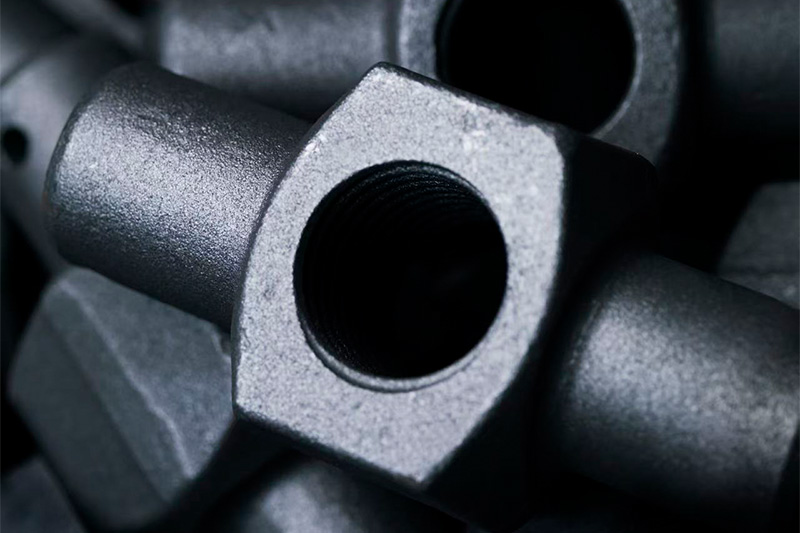
These coatings provide low-cost, functional protection tailored to specific application needs.
5. Paints and Coatings
Liquid and particulate coatings provide customizable finishes:
- Powder Coating: Offers a tough, colorful finish with high impact resistance—commonly used for panels, enclosures, and consumer products.
- Liquid Painting: Flexible for large parts, delivering color and protection via sprayed or dipped application.
- PTFE (Teflon): Provides a low-friction, non-stick surface—for cookware, machinery, or seals.
These coatings balance aesthetics, protection, and functional performance across industries.
Each finishing method has unique strengths. Choosing the right one depends on your base metal, performance needs, appearance goals, and budget constraints. Done right, surface finishing turns good parts into exceptional products ready for demanding environments.
Comparison Table of Surface Finishes
Want to choose the right finish but overwhelmed by options? This table shows at a glance the appearance, benefits, and common uses to help you decide.
Dive Deeper: Understanding Each Finish
Grinding (Matte Appearance)
Grinding delivers tight dimensional control and smooth, matte surfaces. Ideal for gears, shafts, and tooling where accuracy and flatness are critical. Removes machining marks and ensures flatness within microns.

Polishing (Glossy/Mirror Appearance)
Polishing imparts a reflective finish that is both visually appealing and easy to clean. Common in medical devices, consumer hardware, and decorative parts. Helps meet sanitary requirements and hides minor surface flaws.
Anodizing (Colored/Matte Finish)
Anodizing enhances aluminum and titanium with corrosion protection, surface hardness, and color. Used widely in electronics casings, aerospace parts, and decorative trim. Creates a durable oxide layer that’s both functional and aesthetic.
Electroplating (Metallic Shine)
Electroplating deposits metals like chrome or nickel to improve wear resistance and corrosion protection. Widely used in connectors, tools, fasteners, and automotive parts. Offers uniform coverage and metallic finish options.
Powder Coating (Colored Coating)
Powder coating provides a tough, colored finish with excellent impact resistance. Common in structural frames, brackets, and enclosures. It covers irregular shapes uniformly and withstands outdoor exposure.
Black Oxide (Matte Black)
Black oxide treatment gives steel a low-glare, matte black look with mild rust resistance. Frequently used on firearms, machine parts, and tools. Adds a protective layer without significantly affecting dimensions.
Summary Table
| Finish Type | Appearance | Main Benefit | Typical Use |
|---|---|---|---|
| Grinding | Matte | High dimensional precision | Gears, shafts, tool parts |
| Polishing | Glossy/mirror | Cleanability, aesthetics | Medical, consumer hardware |
| Anodizing | Colored/matte | Corrosion resistance & hardness | Aluminum parts, electronics |
| Electroplating | Metallic shine | Wear & corrosion resistance | Connectors, tools, fasteners |
| Powder Coating | Colored coating | Aesthetic & impact resistance | Frames, brackets, panels |
| Black Oxide | Matte black | Mild corrosion protection | Firearms, machine parts |
Choose your finish based on the part’s material, intended use, appearance needs, and tolerance requirements. This comparison helps you quickly align your part’s requirements with the best finishing method.
Choosing the Right Surface Finish
Facing multiple finishing options? Here’s how to match the finish to your part’s specific needs using six key factors.
Quick Answer: Select a surface finish based on material compatibility, operating environment, functional needs, aesthetic goals, tolerance impact, and industry certifications.
Choosing the appropriate finish requires balancing technical demands with visual requirements. Here’s a structured approach to guide your decision.

Dive Deeper: Decision Factors Explained
1. Base Material Compatibility
Not all finishes work on every metal. For example, anodizing is only suitable for aluminum and titanium, whereas plating or black oxide works on steel and other alloys. Confirm the chemical and mechanical compatibility between your chosen metal and finish.
2. Application Environment
Assess the environment your part will face—chemicals, heat, moisture, or UV. Marine gear demands corrosion-resistant finishes like electroless nickel or chromated anodizing. Medical instruments prioritize cleanability via electropolishing or passivation.
3. Functional Requirements
Define what the finish must achieve: – Reduce friction? Choose PTFE or polished surfaces. – Improve wear resistance? Opt for hard chrome or nitriding. – Ensure electrical conductivity? Use silver, gold, or copper plating. – Achieve biocompatibility? Electropolishing or medical-grade passivation are essential.
4. Appearance & Branding Goals
Finish style affects brand perception. High-gloss polish or anodized color can elevate aesthetics for consumer-facing products, while powder coatings offer durable finish with wide color options for visual branding.
5. Tolerance Sensitivity
Some finishes add thickness (e.g., plating, powder coating). When tolerances are tight—especially <0.05 mm—select finishes with minimal build-up, like anodizing or black oxide, or plan in your tolerance budget accordingly.
6. Certification Requirements
Industry standards influence finish selection. Medical devices require ISO 13485-compatible finishes; aerospace parts may require AS9100 or RoHS compliance. Environmental regulations (REACH, RoHS) impact chemical selection in plating and coatings.
By evaluating these six criteria, you can systematically select a finish that fits material, form, function, and regulatory demands—everything the part needs to succeed.
Best Practices for Metal Surface Finishing
Identify the problem—unexpected wear, corrosion, or aesthetic failure—and agitate by noting consequences like recalls or part failure. Then offer a solution: these best practices to guide successful finishing.
Quick answer: Achieve optimal finishes by setting clear performance goals, ensuring material compatibility, avoiding unnecessary specs, documenting details, and conducting validation tests.
Implementing these best practices helps you balance functionality, cost, and quality when choosing a finish.
Dive Deeper: Five Essential Rules
1. Clarify Performance Requirements
Start with why the part needs a finish. Is it for wear resistance, corrosion protection, low friction, electrical insulation, biocompatibility, or visual appeal? Defining the goal upfront avoids paying for unneeded features like decorative polish if corrosion resistance alone suffices.
2. Align Finish to Base Metal
Match the finish method to your material. For instance, aluminum parts should use anodizing, not plating. Stainless steel benefits most from electropolishing or passivation, which enhance corrosion resistance while maintaining precision.

3. Avoid Over-Specifying
Over-specification increases cost and lead time. Only require high-end finishes (e.g., 0.01 µm Ra mirror polish) if functionally essential. Use simpler coatings like black oxide or powder coat when aesthetics or mild corrosion resistance is needed.
4. Document All Surface Specifications
Include roughness (Ra), coating thickness, standards (e.g., MIL-C-5541 for chromate), and method (e.g., Type II anodize) in your drawing notes. Clear documentation ensures manufacturers deliver to exact expectations without ambiguity.
5. Run Appropriate Validation Tests
Before full production, test key performance attributes:
- Salt spray tests for corrosion resistance;
- Adhesion tests for coatings like paint or plating;
- Thickness checks to confirm added baseline accuracy;
- Hardness tests for wear and surface durability.
These checks validate that finishes meet both functional and regulatory standards.
By following these strategies, you avoid unnecessary expense and ensure selected finishes meet real-world demands—delivering reliable, cost-effective, and fit-for-purpose components.
Conclusion
Neglecting the right surface finish can lead to premature failures, safety risks, or compliance issues. But with the right approach, you can transform ordinary metal parts into high-performance components.
Quick answer: Surface finishing isn’t cosmetic—it’s functional. It enhances durability, precision, and safety in demanding industries like aerospace, medical, and industrial equipment.
Now that we’ve explored various finishing methods, the key takeaway is this: your choice of surface treatment must align with your product’s end-use environment, functional requirements, and regulatory constraints.
Dive Deeper: Strategic Surface Finishing in the Product Lifecycle
Why It Matters
The right finish enhances component performance and longevity. For example, anodized aluminum lasts longer in outdoor enclosures, electropolished stainless steel improves biocompatibility for implants, and powder coating protects industrial parts from impact and corrosion.
Lifecycle Integration
Surface finishing isn’t a final touch—it’s a strategic design element. It should be factored in from the beginning during DFM (Design for Manufacturability) planning. Finishes affect:
- Fit: Coating thickness can impact tight tolerances
- Function: Surface friction or conductivity can make or break part performance
- Compliance: ISO 13485, REACH, or RoHS often require validated surface treatments
Neglecting finishing at the design stage risks redesign, rework, or even failed field performance.
Optimize for Success
Finish selection isn’t just engineering—it’s business strategy. The right surface finish can reduce warranty costs, boost customer satisfaction, and open doors to regulated markets like medical or aerospace. When in doubt, consult your manufacturing partner to ensure you’re not under- or over-specifying.
Ultimately, integrating the right surface finish improves aesthetics, extends functional life, and ensures consistent quality across every unit shipped.
How Onlyindustries Supports Your Surface Finishing Needs
Struggling with inconsistent finishes or quality delays? Those issues can lead to project hold-ups and non-compliance. At Onlyindustries, we eliminate these risks by integrating expert surface finishing into every stage of production.
Quick answer: We offer a complete suite of finishes, engineering support, certified quality control, and fast in-house capabilities to streamline your production process and ensure consistent, compliant results.
Our approach ensures you get exactly the finish you need—on time and without surprises.
Dive Deeper: Our Value-Driven Finishing Solutions
1. Comprehensive In-House Finishing
We provide full finishing services right on site: anodizing (Type II/III), electroless and electrolytic plating, powder coating, mechanical and chemical polishing, passivation, black oxide, and conversion coatings. This control reduces delays, handling damage, and inconsistency.
2. Design-for-Manufacturability (DFM) Oversight
Our engineering team reviews your design to anticipate finish effects—coating thickness on tolerances, surface roughness vs wear, adhesion prep. We optimize finishes early to avoid costly redesigns or out-of-spec parts.
3. Certified Quality Management
We operate under ISO 9001 and ISO 13485 systems with documented procedures, traceability, and audit-ready records. Finished parts are inspected per spec: roughness, adhesion, thickness, corrosion resistance, and contamination—all tied to batch records.
4. Faster Turnarounds & Cost Predictability
In-house finishing eliminates outsourcing delays. You get predictable timelines and consolidated quotes, reducing logistics costs and administrative overhead.
5. Turnkey Machining + Finishing Integration
We combine CNC machining and finishing into a single flow—no risk of cross-communication issues. That seamless process ensures the surface treatment complements dimensional precision, delivering production-ready parts from a single source.
With Onlyindustries handling machining, finishing, quality systems, and regulatory compliance, you gain peace of mind—and a smoother path from prototype to production.