Skip to content
Chrome plating is a popular surface finishing method valued for both aesthetic appeal and functional performance. However, not all chrome plating is created equal. The two dominant categories—hard chrome plating and decorative chrome plating—serve distinct purposes and industries.
This guide provides a comprehensive comparison of these two types, helping you select the optimal surface treatment for your application based on performance, appearance, and budget.
What Is Chrome Plating?
In manufacturing, chrome plating refers to the electrochemical process of applying a thin layer of chromium onto a metal or plastic surface. This surface treatment is widely used for both its performance-enhancing and decorative benefits, depending on the type of plating applied.

Snippet: Chrome plating is an electroplating process that deposits chromium onto a surface to improve corrosion resistance, durability, appearance, and hardness. It is used for both industrial and decorative purposes.
Why Use Chrome Plating?
The advantages of chrome plating make it suitable for everything from hydraulic rods to automotive trims. It enhances components in several ways:
- Corrosion Resistance: Protects against moisture, chemicals, and oxidation
- Wear and Abrasion Resistance: Extends service life under high-load or frictional environments
- Visual Appearance: Delivers a sleek, polished look for consumer-facing parts
- Surface Hardness: Increases resistance to scratching and deformation
Types of Chrome Plating
| Type | Description | Typical Thickness | Primary Purpose |
|---|---|---|---|
| Hard Chrome (Industrial Chrome) | Thick, wear-resistant layer applied to metal parts under stress | 20–500 µm | Functional performance and durability |
| Decorative Chrome (Bright Chrome) | Thin chrome coating over nickel for visual and light-duty corrosion resistance | 0.1–0.3 µm (chrome only) | Aesthetic finish for consumer goods |
Process Overview
Chrome plating involves preparing the substrate (cleaning and degreasing), applying a base layer (nickel or copper for decorative chrome), and then using electroplating to deposit the chromium layer. The end result depends on current density, bath composition, and intended use.
Understanding these two paths—hard chrome for industrial robustness and decorative chrome for visual appeal—helps in selecting the right solution for your specific application needs.tic enhancement, creating two categories: Hard Chrome (Industrial Chrome) and Decorative Chrome (Bright Chrome).
Hard Chrome Plating: What Makes It Ideal for Industrial Applications?
Hard chrome plating, also known as industrial chrome, is specifically engineered for durability rather than appearance. This process involves depositing a thick layer of chromium onto metal components to drastically improve their wear performance and extend service life under high-stress conditions.

Snippet: Hard chrome plating applies a thick chromium layer (20–500 µm) to metal parts, enhancing hardness, wear resistance, and dimensional precision—ideal for industrial machinery and tooling.
Key Functional Characteristics
| Attribute | Value |
|---|---|
| Layer Thickness | 20–500 µm |
| Hardness | ~68–72 HRC |
| Coefficient of Friction (dry) | 0.15–0.25 |
| Finish Appearance | Matte to semi-bright |
| Adhesion Quality | Excellent on properly prepped steel |
| Corrosion Resistance | High (especially over a nickel or undercoat) |
Advantages of Hard Chrome
- Exceptional Hardness: Greatly improves wear life under mechanical friction
- Friction Reduction: Enhances part performance in moving assemblies
- Post-Processing Friendly: Easily ground or honed for dimensional accuracy
- Dimensional Control: Maintains tight tolerances even after finishing
Drawbacks to Consider
- Brittleness: Can be prone to cracking if not evenly deposited
- Limited Substrate Compatibility: Best suited for steel; not ideal for plastics or soft alloys
- Environmental Risks: Utilizes hexavalent chromium, a toxic compound regulated by OSHA and REACH
Industrial Relevance
Hard chrome is the go-to for applications where strength, wear resistance, and dimensional control are non-negotiable. This includes high-load machinery, hydraulic rods, press tooling, and molds—components that cannot afford premature degradation or failure under stress.
Decorative Chrome Plating: Aesthetic Brilliance Meets Practicality
Decorative chrome, often called bright or mirror chrome, focuses on visual appeal and corrosion protection rather than wear resistance. A thin chromium layer is plated over a nickel base, resulting in a shiny, elegant finish suitable for consumer and decorative applications.

Snapshot: Decorative chrome plating creates a high-gloss finish with strong corrosion protection, ideal for trim, fixtures, and plastic components—while keeping costs low.
Key Properties
| Attribute | Value |
|---|---|
| Total Thickness | ~0.1–0.3 µm Cr over 5–30 µm Ni |
| Appearance | Bright, mirror-like |
| Compatible Substrates | Steel, brass, plastics |
| Corrosion Resistance | Excellent (thanks to nickel underlayer) |
| Adhesion | High, with proper surface prep and layering |
Advantages
- High-Gloss Aesthetic: Ideal for decorative trims and visible hardware
- Strong Corrosion Resistance: Durable nickel layer protects underlying material
- Substrate Versatility: Can be plated on metals and molded plastics
- Cost-Effective: Suitable for large-scale consumer goods
Limitations
- Low Wear Durability: Thin chrome layer not designed for abrasion-heavy components
- Peeling Risk: Poor adhesion techniques can cause flaking over time
- Not Re-Machinable: Cannot be modified once plated
Suitable Use Cases
Decorative chrome plating is commonly applied to products where appearance and moderate corrosion resistance are key, such as:
- Automotive trim, grilles, and emblems
- Bathroom and kitchen fixtures
- Hand tools and hardware
- Plastic consumer electronics housings
Hard Chrome vs. Decorative Chrome: Summary Table
This overview contrasts hard chrome plating—optimized for heavy-duty wear—with decorative chrome plating, designed for visual appeal and corrosion resistance.

| Feature | Hard Chrome | Decorative Chrome |
|---|---|---|
| Purpose | Functional wear resistance | Aesthetic, high‑gloss finish |
| Layer Thickness | 20–500 µm | 0.1–0.3 µm (over 5–30 µm Ni) |
| Hardness | ~70 HRC | Low (mirror chrome) |
| Corrosion Resistance | Moderate–High | High |
| Finish Appearance | Matte to semi‑gloss | Mirror-like, reflective |
| Post-Machining Capability | Grindable/honeable | Not machinable |
| Compatible Substrates | Steel (industrial parts) | Steel, brass, plastics |
| Cost | Higher | Lower |
Applications
Choosing the right type of chrome plating depends heavily on the application—whether the part demands mechanical durability or high-end appearance.
Hard Chrome Plating Applications
Hard chrome plating is primarily used where wear resistance, low friction, and dimensional stability are critical. Here’s where it shines:
- Hydraulic Cylinders: Ensures long-lasting sealing surfaces and minimal wear under pressure.
- Engine Crankshafts: Enhances lifespan through reduced friction and better wear resistance.
- Injection Molds: Resists corrosion and abrasion during high-pressure plastic molding.
- Press Tooling: Maintains precision under repeated impact and metal forming stress.
- Aerospace Actuators: Meets tight tolerances for mechanical systems in aircraft.
- Printing Rollers: Offers smooth, durable surfaces ideal for repetitive motion and ink resistance.
Decorative Chrome Plating Applications
Decorative chrome plating enhances aesthetic value while providing corrosion resistance. Common uses include:
- Car Grilles and Trims: Delivers showroom appeal with long-lasting shine.
- Faucets and Bathroom Fixtures: Combines water resistance with a sleek, modern look.
- Hand Tools: Provides corrosion resistance and a professional finish.
- Furniture Handles: Offers both functionality and visual elegance in home and office furnishings.
- Motorcycle Accessories: Ensures durability while maintaining aesthetic appeal in exposed parts.
- Consumer Electronics: Adds polish and protection to product exteriors and trims.

Environmental & Safety Concerns
Chrome plating processes, while effective, carry serious environmental and safety implications due to the use of hazardous substances—chief among them, hexavalent chromium (Cr⁶⁺).
Hexavalent chromium is a known carcinogen that can cause respiratory issues, skin irritation, and long-term health damage. Its use is strictly regulated worldwide to minimize human and environmental exposure.
Regulatory Oversight
Several international frameworks govern the handling and emissions of Cr⁶⁺:
- OSHA (USA): Imposes strict exposure limits in plating facilities and mandates proper ventilation, PPE, and workplace monitoring.
- REACH (EU): Requires detailed safety documentation and limits use unless justified by technical necessity with no safer alternative.
- RoHS (Electronics): Restricts use of Cr⁶⁺ in electronic components sold in the EU to prevent hazardous waste accumulation.
Eco-Friendly Alternatives
In response to rising environmental concerns, industries are adopting safer alternatives such as:
- Trivalent Chromium (Cr³⁺): Less toxic and more environmentally stable, though slightly different in appearance and hardness.
- Physical Vapor Deposition (PVD): A vacuum-based, dry process that applies durable coatings without hazardous chemicals.
- Powder Coatings and Electroless Nickel: Used in applications where corrosion protection is critical but toxicity must be minimized.
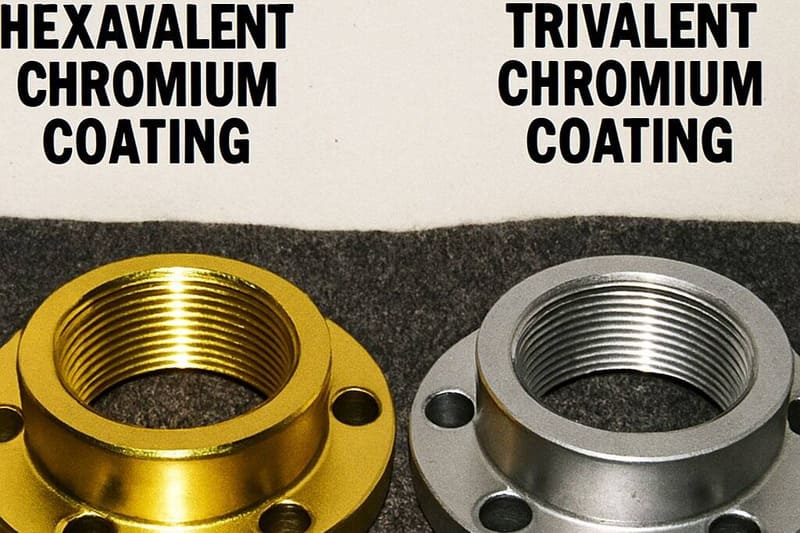
While hexavalent chrome is still widely used for its superior performance in certain industrial contexts, regulations and innovations are steadily shifting the industry toward cleaner, safer plating solutions.
Conclusion: Which Chrome Plating Should You Use?
Choosing the right chrome plating depends entirely on your application’s functional and aesthetic priorities.
Here’s a quick-reference guide to help you make an informed decision:
| Scenario | Recommended Plating |
|---|---|
| Industrial use with friction | Hard Chrome |
| Wear-critical parts (tools, shafts) | Hard Chrome |
| Visual or decorative components | Decorative Chrome |
| Corrosion protection with style | Decorative Chrome |

If your part is built to withstand stress, friction, or mechanical load, hard chrome is the reliable choice for long-lasting durability. On the other hand, if your component needs to shine on display, fight rust in style, or integrate into high-visibility consumer products, decorative chrome is the smarter solution.
Both plating types offer unique strengths. Understanding your functional goals and environmental constraints is key to maximizing performance, longevity, and value.go.
Expert Tip from Onlyindustries
“For high-wear mechanical parts, hard chrome delivers unmatched strength and durability. But for parts that need to look sleek on a showroom floor—decorative chrome offers the brilliance consumers love.”
Before selecting a plating method, always verify:
- Substrate Compatibility: Ensure your base material (steel, brass, plastic) is suitable for the type of chrome plating you’ve chosen.
- Post‑Machining Needs: Hard chrome allows for re‑machining; decorative chrome does not—plan accordingly.
- Compliance Requirements: Check environmental and safety regulations such as OSHA, REACH, and RoHS where applicable.
Partner with Onlyindustries for Precision Chrome Solutions
At Onlyindustries, we help you make the right choice for your application by offering:
- Technical consultations on plating type vs. part performance
- Full CNC machining with post‑plating readiness
- Access to eco‑friendly alternatives like trivalent chrome and PVD coatings
- Low‑MOQ prototyping and scalable production with quality control
Ready to optimize your parts for durability or display appeal? Contact sales@onlyindustries.com today to discuss your next chrome plating project.
Need Chrome Plating Guidance?
If you’re unsure whether to choose hard chrome or decorative chrome—or need help with specialty finishes—Onlyindustries is here to assist. We offer full-cycle support from material selection to final finish.
- Expert recommendations for industrial and aesthetic applications
- CNC machining integrated with plating and finishing services
- Eco-friendly options: trivalent chrome, PVD, and REACH-compliant coatings
- Support for prototype runs, batch orders, and high-volume production
Contact us today to get started on your next precision chrome plating project. Whether you need durability, shine, or both—we’ll help you find the perfect solution.