Skip to content
Even the best CNC programs fall short without stable, precise workholding. That’s why fixtures play a central role in delivering tolerances, surface finishes, and consistent results across runs.
A CNC fixture is a mechanical device used to locate, hold, and support a workpiece during machining, ensuring it remains immobile and properly oriented relative to cutting tools. Fixtures do not guide the tool — unlike jigs — but they do define how the part behaves under stress and motion during machining.
Let’s explore the key fixture types, their ideal applications, and essential fixture design tips based on real-world CNC manufacturing experience.
What Is a CNC Fixture?
Misaligned or unstable parts during CNC machining can lead to tolerances out of spec, tool breakage, and excessive rework. That’s where CNC fixtures come in — providing the essential support every machinist relies on.
A CNC fixture is a precision-engineered device that securely holds and locates a workpiece during machining operations. It’s a custom or standardized tool fixed to the CNC machine’s bed or table that ensures the workpiece maintains its position under cutting forces. Fixtures are fundamental to achieving repeatable, high-accuracy results in milling, turning, drilling, and multi-axis operations.
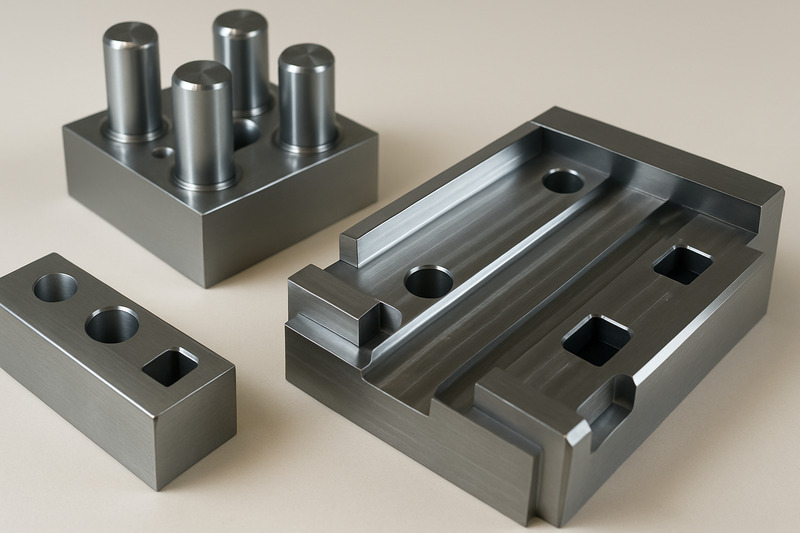
Fixtures differ from jigs in that they do not guide the cutting tool — they strictly focus on positioning and securing the part. Their primary role is to resist motion caused by spindle torque, tool pressure, and machine vibrations. Whether for a one-off prototype or mass-produced batch, a well-designed fixture allows faster setups, better finish quality, and consistent tolerances.
Why CNC Fixtures Matter?
Even the most accurate CNC machines cannot deliver on precision if the workpiece moves. Fixtures eliminate movement while enabling efficient tool access and chip clearance.
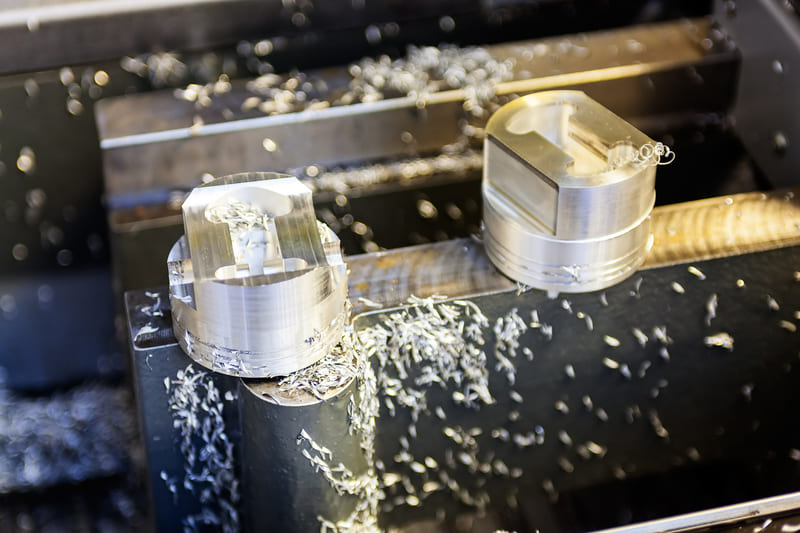
Here’s what an effective CNC fixture ensures:
- Positional Accuracy: Aligns the workpiece to the machine’s coordinate system with micrometer-level precision.
- Rigidity Under Load: Withstands lateral, axial, and vibrational forces from cutting without shifting or flexing.
- Ease of Operation: Supports quick loading/unloading for better cycle times and higher throughput.
- Tool Access: Maintains clearance so tools can reach the necessary surfaces without collision.
How Fixtures Differ from Other Workholding Tools
| Workholding Tool | Primary Function | Typical Use |
|---|---|---|
| Fixture | Clamps and locates workpiece only | Milling, turning, grinding |
| Jig | Locates and guides the cutting tool | Drilling, tapping |
| Vise | General-purpose clamping | Versatile for all operations |
| Collet | Grips cylindrical parts concentrically | Turning, bar feeding |
Example in Action
When producing precision aluminum housings for medical devices, I once noticed unacceptable dimensional variation due to an outdated vise setup. Switching to a dedicated 3-2-1 principle fixture not only solved tolerance issues but also reduced setup time by 40%. That’s the real power of fixture optimization.
Ultimately, CNC fixtures are more than just clamps — they are the silent partners of successful manufacturing. From holding tight-tolerance aerospace brackets to multi-sided battery modules, they’re essential for transforming digital designs into precise, physical reality.
Common Types of CNC Fixtures
Without the right type of fixture, even the best CNC machine can produce off-spec parts or waste valuable production time. Choosing the correct fixture type is foundational to your machining strategy.
CNC fixtures come in a variety of designs tailored to different part geometries, materials, production volumes, and machining operations. From modular systems for prototypes to dedicated fixtures for mass production, the selection you make can directly impact part quality and lead time.
Below, I break down the most commonly used CNC fixture types, their features, and where they fit best in the manufacturing process.
Which Types of CNC Fixtures Are Commonly Used?
Different jobs call for different fixturing strategies. Here are the most prevalent fixture types in CNC machining today:
| Fixture Type | Description | Best Used For |
|---|---|---|
| Plate Fixture | A flat base with locator pins and clamps for positioning. | Flat plates, basic prismatic shapes. |
| Angle Plate Fixture | L-shaped fixture that supports vertical positioning of parts. | Edge or end milling, side-face operations. |
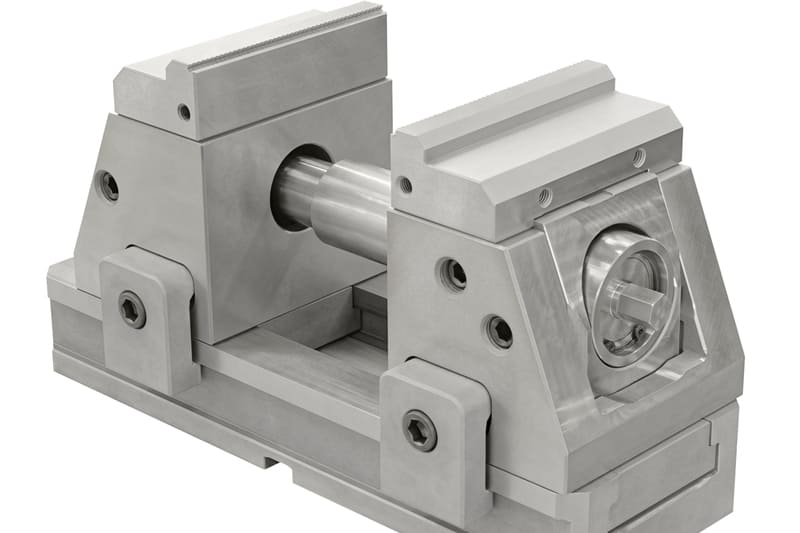
| Vise Fixture | A precision vise mounted directly to the CNC table. | General-purpose holding, quick setups. |
| Modular Fixture | Assembled from blocks, plates, and clamps for flexibility. | Prototypes, one-offs, R&D. |
| Custom Fixture | Built specifically to match complex part geometry. | Mass production, high-complexity parts. |
| Collet Fixture | Uses collets to concentrically clamp cylindrical parts. | Shafts, tubes, bar stock turning. |
| Vacuum Fixture | Holds thin or delicate parts with suction instead of mechanical clamping. | Sheet metal, plastic, engraving plates. |
| Magnetic Fixture | Employs magnetic force to hold ferrous metal parts flat. | Surface grinding, steel sheet machining. |
| Pallet Fixture | Preloaded fixture pallets for rapid changeovers. | High-volume production, automation. |
How I Use These Fixtures in Real Projects
When I worked on a multi-component aerospace bracket that required milling on five faces, I turned to a custom 5-axis fixture with support pads and indexing pins. For a short-run R&D part, a modular fixture gave me the agility to reconfigure quickly without sacrificing precision. And for high-volume aluminum cover plates, pallet fixtures helped reduce changeover time from 15 minutes to under 2 minutes.
Choosing the right fixture type depends on your production scale, machine axis availability, and complexity of the part. When in doubt, modular solutions are a great place to start — but custom fixtures will always offer the best speed and accuracy for repeat work.
Key Applications of CNC Fixtures
No matter how sophisticated your CNC machine is, the wrong workholding setup can ruin everything — from tolerances and surface finish to spindle life and throughput. That’s where CNC fixtures shine: they provide the stable, repeatable foundation necessary for machining success across different processes.
CNC fixtures aren’t limited to one type of operation. They’re integral to milling, turning, drilling, and even 5-axis setups. Below, I’ll break down the key machining applications where fixtures play a mission-critical role.
Understanding the unique fixture needs of each application helps streamline your setup, minimize scrap, and reduce overall machining costs.
Where Are CNC Fixtures Most Commonly Used?
CNC fixtures are applied wherever part stability, orientation, and repeatability are essential. Here are the most important use cases:
1. Milling
Milling operations — whether face, slot, or contour milling — require fixtures that can resist strong lateral and axial forces while offering unrestricted tool access.
- Fixture Requirements: High rigidity, clearance for tool paths, chip evacuation
- Common Fixtures: Plate fixtures, angle plate fixtures, modular setups
When I machine structural aluminum parts, I rely on low-profile plate fixtures with dowel pins to eliminate lateral shift during slot milling, and I often add support pads for thin sections.
2. Turning
Turning uses fixtures that ensure concentricity and prevent axial runout. Fixtures like collets or custom chucks help maintain balance and symmetry.
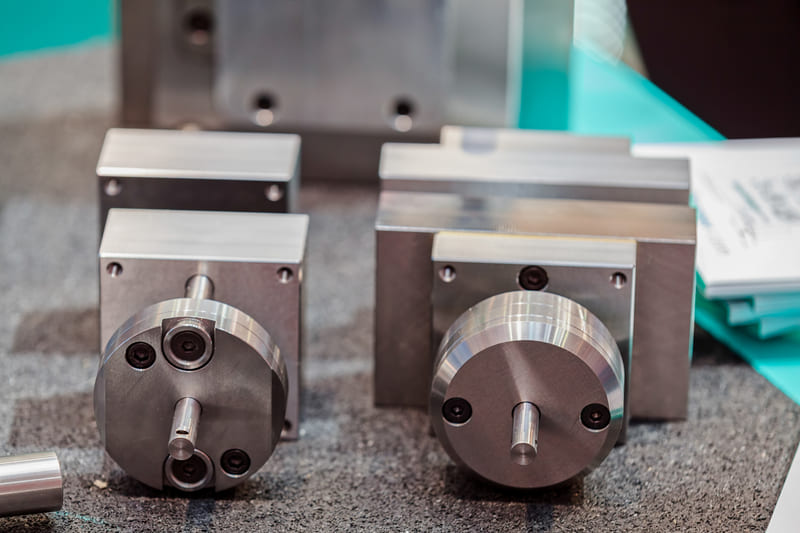
- Fixture Requirements: Strong axial grip, high-speed compatibility
- Common Fixtures: Collet fixtures, hydraulic chucks
I’ve used collet fixtures for turning precision shafts in stainless steel — it helped minimize runout and boosted repeatability during high-volume production runs.
3. Drilling & Tapping
For hole-making operations, fixture design must ensure precise alignment of the tool and part while absorbing axial forces during drilling and tapping.
- Fixture Requirements: Vertical alignment, part rigidity, guide bushings if needed
- Common Fixtures: Plate fixtures with drill guides or integrated bushings
Drilling patterns into aluminum enclosures, I’ve added guide sleeves in fixtures to improve repeatability and reduce tool breakage when tapping M4 threads at shallow depths.
4. Multi-Part Fixturing
Holding multiple parts at once reduces cycle time and increases machine utilization, especially in production environments.
- Fixture Requirements: Repeatable indexing, modularity, easy loading/unloading
- Common Fixtures: Pallet fixtures, modular plates with repeat locators
In a recent job producing brackets for electronics, I held eight parts per cycle using a modular fixture system — it cut machining time per part by 40%.
5. 5-Axis Machining
With simultaneous motion on multiple axes, 5-axis machining demands compact fixtures that allow free rotation and minimize collision risks.
- Fixture Requirements: Low-profile clamping, minimal obstruction, secure part grip
- Common Fixtures: Custom 5-axis vises, dovetail clamps, self-centering fixtures
For titanium medical housings, I designed a dovetail clamp fixture that held the part securely on its narrow base, allowing full access for machining without refixturing.
Summary Table: CNC Fixture Applications
| Application | Fixture Features | Common Fixture Types |
|---|---|---|
| Milling | Rigidity, chip clearance, tool access | Plate, angle plate, modular |
| Turning | Axial stability, concentric holding | Collet, chuck fixtures |
| Drilling/Tapping | Vertical alignment, force resistance | Guided plate fixtures |
| Multi-Part | Batch holding, quick swaps | Pallet, modular fixtures |
| 5-Axis Machining | 360° tool access, compact size | Dovetail, self-centering |
Choosing the right fixture for your specific CNC application is as critical as your toolpath strategy or material selection. Each operation has unique needs — and a well-matched fixture improves everything from speed to surface finish.
CNC Fixture Design Tips
Designing a CNC fixture isn’t just about clamping a part — it’s about ensuring consistent accuracy, minimizing setup time, and reducing machining costs. A well-thought-out fixture boosts part quality and machine efficiency from prototype to full production.
When I design fixtures, I don’t just think about how to hold the part; I also consider how it’ll be loaded, how many parts I can machine per cycle, and how the tools will access each surface. Here’s how to approach fixture design like a seasoned machinist.
Let’s break down seven key principles for designing CNC fixtures that deliver reliability, repeatability, and real ROI on the shop floor.
What Are the Most Effective CNC Fixture Design Tips?
The secret to a high-performing CNC fixture lies in how well it aligns with your machine, part geometry, and process goals. Below are practical design insights that have helped me optimize both in-house prototypes and high-volume production work.

1. Apply the 3-2-1 Principle
This fundamental fixture theory constrains all six degrees of freedom using just six points:
- 3 points on the base to restrict Z-axis movement
- 2 side points to block Y-axis motion
- 1 point on the end to lock the X-axis
Using this method guarantees that the part is consistently located — and that no unnecessary stress is introduced into the part during clamping.
2. Design for Quick Setup
Reducing machine downtime is one of the easiest ways to save money. Use:
- Locating pins for repeatable placement
- Quick-release clamps or pneumatic systems
- Modular baseplates that allow swap-in/out of fixtures
I once cut setup time from 40 minutes to 8 minutes by redesigning a fixture to include cam-operated clamps instead of bolts — that saved hours over a long production run.
3. Maximize Tool Access
If a tool can’t reach a surface, you’ll either need to reposition the part or skip the feature — both cost time and accuracy.
- Avoid fixture arms that block cutting paths
- Use low-profile clamps or edge-gripping solutions
- Consider 5-axis fixtures for multi-face access
In 5-axis setups, I design compact, minimal-profile fixtures with minimal overhangs to avoid interference and tool collisions.
4. Choose the Right Fixture Material
The material of your fixture affects durability, accuracy, and even machine load:
| Material | Use Case | Pros | Cons |
|---|---|---|---|
| Tool Steel | Long runs, hard materials | Rigid, durable, heat-resistant | Heavy, expensive |
| Aluminum | Prototypes, light parts | Lightweight, easy to machine | Less wear-resistant |
| Polymer (Delrin/HDPE) | Soft jaws, fragile parts | Non-marring, low cost | Low stiffness |
5. Go Modular When Possible
If your shop handles low-volume or high-mix parts, modular fixtures are a game-changer:
- Reconfigurable clamps, locators, and supports
- Cost-effective fixture reuse
- Faster prototype iteration cycles
I’ve retooled the same modular plate fixture for over 20 part designs — that flexibility has saved me thousands in custom fixture costs.
6. Include Reference Datums
Datums ensure that your fixture and part align perfectly with the CNC’s coordinate system:
- Add ground faces or dowel pins that match your CAD model’s datums
- Use laser-etched X/Y/Z indicators for inspection alignment
This small detail pays off during inspection — especially when using CMMs or vision systems that rely on fixture datums for probe alignment.
7. Prevent Part Deflection and Distortion
Clamping forces can bend or distort thin-walled parts unless precautions are taken:
- Use soft jaws or custom inserts for fragile features
- Support internal cavities with backup blocks
- Simulate clamping stress in FEA if tolerances are critical
For a large aluminum housing, I once added internal ribs in the fixture to eliminate flexing during slotting — which corrected a 0.2 mm warping issue.
Designing your fixture with these principles ensures that your parts remain stable, machinable, and in-spec from first cut to final QC inspection. It’s not just about clamping — it’s about controlling the entire machining process through smart, robust fixturing.
CNC Fixture vs Jig
In precision manufacturing, the terms “fixture” and “jig” are often used interchangeably — but they serve very different roles on the shop floor. Confusing them can lead to improper setups, inefficiencies, and even scrapped parts.
When I first started working in CNC machining, I misunderstood the difference between a jig and a fixture. Once I learned how each supports the machining process differently, it completely changed how I approached tooling design and setup strategy.
Let’s dive into the real differences between CNC fixtures and jigs — and when to use each for optimal results.
What’s the Difference Between a CNC Fixture and a Jig?
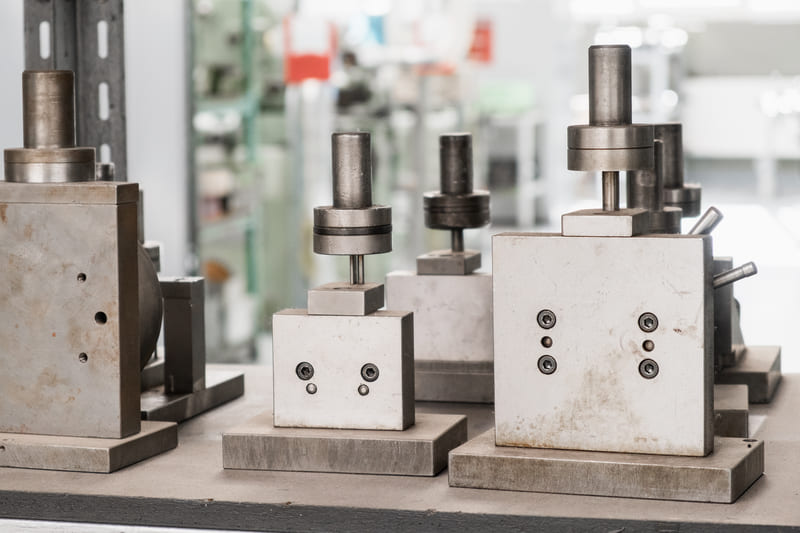
Fixtures and jigs both help ensure precision, but they serve distinct purposes. Here’s the direct answer: A fixture holds the workpiece in a precise location during machining, while a jig both locates the part and guides the cutting tool.
Understanding the Core Distinction
| Feature | Fixture | Jig |
|---|---|---|
| Function | Secures and locates the workpiece | Secures the workpiece and guides the tool |
| Tool Movement | Tool operates independently | Tool is guided through the jig |
| Typical Use | Milling, turning, grinding | Drilling, tapping, reaming |
| Mounting | Usually fixed to machine bed or table | Often moves or aligns with the tool |
| Complexity | More complex clamping and locators | Often simpler, includes guide bushings |
Real-World Example
Let’s say I’m producing a batch of aluminum housings that require side milling and precision bore drilling. For milling, I’d use a fixture to hold the part flat against the table and ensure tight location along X/Y/Z. But for the bore drilling, I’d employ a jig with hardened bushings to guide the drill bit perfectly into place without relying on CNC programming precision alone.
Key Considerations When Choosing
- Automation Compatibility: Fixtures are typically integrated into CNC workflows and allow automated tool paths; jigs are more common in manual or semi-automated processes.
- Process Complexity: Use a fixture when machining multiple sides or when precision re-location is needed; use a jig when multiple identical holes or simple geometry need repeatable guidance.
- Volume and Cost: Jigs are lower-cost for simple high-volume operations like manual drilling; fixtures are better for multi-operation CNC runs.
Modern CNC Trends
In today’s automated manufacturing environments, fixtures are used far more frequently than jigs. That’s because CNC machines are already capable of high-accuracy motion control, making external tool guidance (i.e., jigs) unnecessary in most cases.
Still, I occasionally design drill jigs for legacy jobs or hybrid manufacturing cells where manual steps are involved. For example, aerospace and defense components sometimes require a combination of CNC precision and jig-guided manual inspection or finishing processes.
In summary, knowing when to use a fixture vs. a jig ensures that you don’t over-engineer your setup — or worse, under-prepare and compromise part quality. The right tool for the job can reduce setup time, improve repeatability, and cut cost per part — every time.
Benefits of Well-Designed CNC Fixtures
If your CNC setup still relies on makeshift clamps or one-size-fits-all vises, you’re leaving time, accuracy, and profit on the table. A well-designed CNC fixture isn’t just helpful — it’s mission-critical for achieving top-tier part quality and production efficiency.
So what’s in it for your shop or project? Let’s break down the tangible advantages of investing time in fixture design, especially when precision and volume matter.
Well-designed CNC fixtures create consistency, reduce waste, and unlock higher machining performance across the board.

Why Are Good CNC Fixtures So Important?
A CNC fixture allows a part to be held securely and repeatably across multiple setups and operations. When thoughtfully designed, it reduces human error, minimizes alignment adjustments, and allows the machine to operate at peak speed without compromising safety or tolerances.
Top Benefits of Effective Fixture Design
| Benefit | Description |
|---|---|
| Tighter Tolerances | By eliminating micro-movement and vibration during cutting, high-quality fixtures help achieve micron-level precision — especially vital for aerospace, optics, and medical parts. |
| Increased Tool Life | Fixtures ensure consistent engagement between tool and part, reducing chatter, heat buildup, and unexpected deflections that wear out tools prematurely. |
| Reduced Scrap Rates | With the part held consistently in the same orientation, the likelihood of rejects due to misalignment, chatter, or missed tolerances drops significantly. |
| Faster Setup Times | Quick-locating pins, modular plates, or zero-point fixturing systems can turn a 20-minute setup into a 2-minute plug-and-play process — critical for high-mix production. |
| Higher Consistency | Fixtures eliminate the human variable and allow even entry-level operators to run complex jobs with minimal oversight. This is especially useful in lights-out or automated production. |
| Support for Multi-Axis Operations | Specialized 5-axis or tombstone fixtures allow uninterrupted machining on multiple sides, reducing the need for part re-clamping and its associated risk of deviation. |
| Lower Cost per Part | Although a custom fixture has an up-front cost, the reduction in setup time, improved cycle time, and minimized scrap makes it a strong ROI decision, especially for batch runs. |
Personal Insight
One time, I was working on a 3,000-part aluminum housing job with ±0.01 mm tolerance requirements. We started with soft jaws in a vise, which worked — until the operator spent nearly 8 minutes dialing each part in. Once we designed a dedicated plate fixture with integrated locators, we shaved off 6 minutes per part. That added up to over 300 hours saved — not to mention the stress it lifted off the production floor.
Real-World Applications
- Automotive: Engine head milling on fixture pallets for quick swap
- Aerospace: Titanium bulkheads held with zero-point locating systems
- Medical: Multi-part setups for orthopedic components on modular fixturing plates
In the end, a fixture is more than just a clamping tool — it’s the foundation for reliable, repeatable machining. Whether you’re chasing tighter tolerances, faster throughput, or just fewer headaches, it pays to start with the right fixture design.
Industries Using CNC Fixtures
Whether it’s crafting aerospace components or assembling consumer electronics, one thing holds true across industries — the demand for precision and repeatability. CNC fixtures are the silent backbone of modern manufacturing, ensuring every cut, hole, and contour is in exactly the right place, time after time.
CNC fixtures aren’t industry-specific. Their versatility spans everything from titanium jet parts to stainless steel surgical tools. Let’s explore how different sectors benefit from this essential workholding technology.
Each industry places different performance and tolerance demands on fixtures — yet they all depend on secure, repeatable fixturing systems for quality machining.
Which Industries Rely Most on CNC Fixtures?
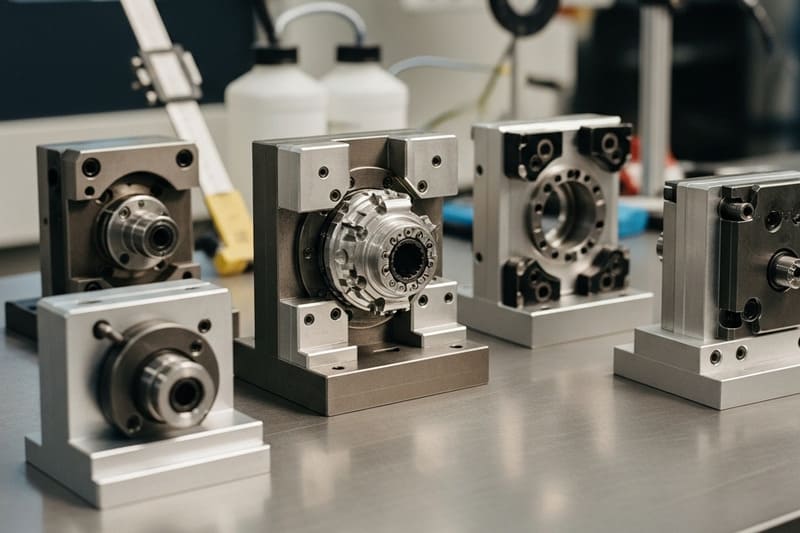
CNC fixtures have wide-ranging applications, but here’s how they play a strategic role in specific high-performance sectors.
1. Aerospace
- Parts: Brackets, wing spars, fuel manifolds, titanium bulkheads
- Why Fixtures Matter: Aerospace demands extremely tight tolerances and zero defects. Fixtures must handle exotic materials (Inconel, titanium), support 5-axis access, and allow long cycle times without deflection.
- Typical Fixture: Custom modular baseplates with hardened bushings, zero-point clamping systems
2. Automotive
- Parts: Transmission housings, engine heads, control arms
- Why Fixtures Matter: High throughput is the name of the game. Automotive shops prioritize fast changeovers, multi-part setups, and durable fixturing for production lines.
- Typical Fixture: Palletized fixtures with hydraulic or pneumatic clamps for robotic loading
3. Medical Devices
- Parts: Orthopedic implants, surgical tools, dental components
- Why Fixtures Matter: Fixtures need to hold small, intricate parts without distortion. Bio-compatible materials like titanium require vibration-free machining, and cleanliness is critical.
- Typical Fixture: Soft jaws, vacuum workholding, low-profile vises with polished contact surfaces
4. Consumer Electronics
- Parts: Laptop chassis, smartphone frames, connectors
- Why Fixtures Matter: Cosmetics and finish quality are essential. Fixtures must support thin walls and tight surface flatness while avoiding scratches or tool vibration.
- Typical Fixture: Vacuum plates for aluminum, rubberized clamps, anodize-safe padding
5. Renewable Energy
- Parts: Solar panel mounts, wind turbine hubs, inverter brackets
- Why Fixtures Matter: Large-scale components often require fixturing that supports heavy loads and accommodates thermal expansion or casting variation.
- Typical Fixture: Oversized modular tombstones, heavy-duty t-slot tables, custom steel jigs
6. Defense & Military
- Parts: Weapon mounts, vehicle armor panels, missile components
- Why Fixtures Matter: Materials vary widely — from aluminum to high-strength steels. Fixtures must handle aggressive machining and ensure repeatable results in mission-critical parts.
- Typical Fixture: Hardened steel bases, clamping force monitoring systems, impact-dampening pads
Fixture Versatility Across Volumes
| Industry | Typical Volume | Fixture Type |
|---|---|---|
| Aerospace | Low-to-Mid Volume | Custom modular with 5-axis access |
| Automotive | High Volume | Palletized hydraulic fixtures |
| Medical | Mid Volume | Precision vises, vacuum chucks |
| Electronics | High Volume | Rubberized soft clamping, vacuum pads |
| Renewables | Low Volume | Large modular setups, t-slot jigs |
From nanometer tolerances in aerospace to mass production lines in automotive, CNC fixtures are tailored to fit the pace, precision, and part geometry of every industry.
When designed properly, a fixture doesn’t just hold your part — it holds your reputation for precision, reliability, and delivery performance.
Final Thoughts
In CNC machining, consistent precision isn’t just a goal — it’s a requirement. And behind every high-tolerance part is a well-designed fixture that makes it all possible. I’ve seen firsthand how the right workholding system can turn a chaotic production floor into a streamlined operation, reducing errors, scrap, and downtime.
From aerospace-grade titanium to lightweight consumer electronics, CNC fixtures adapt to material, geometry, and production volume. But they’re not a one-size-fits-all solution. The most effective fixtures are born from collaboration between design engineers, machinists, and production managers. When each voice is heard early in the process, the result is a fixture that works smarter — not harder.
If I could offer one piece of advice: don’t treat fixturing as an afterthought. Instead, see it as a strategic tool that multiplies the value of your machines, tooling, and team expertise. When you invest in proper fixturing, you’re not just securing a workpiece — you’re securing throughput, quality, and scalability.
At Onlyindustries, our fixturing expertise goes beyond clamps and baseplates. We deliver production-ready solutions engineered for your specific parts, processes, and constraints. Whether it’s prototyping or multi-station high-volume production, we design with lean principles and operator efficiency in mind.
Let’s Talk Fixtures: If you’re scaling production or struggling with inconsistent machining results, reach out to us. We’re here to co-engineer the optimal fixture strategy for your success.
Partner with Onlyindustries for Custom Fixturing
Struggling with inconsistent part quality, long setup times, or rising production costs? You’re not alone — and the root cause often lies in poor or inadequate fixturing. That’s exactly where we come in. At Onlyindustries, we believe custom CNC fixtures should be an integral part of your production strategy, not an afterthought.
If you’ve ever dealt with repeatability issues during 5-axis machining or spent hours dialing in a setup for a complex part, then you know the difference a purpose-built fixture can make. We design fixtures with manufacturability, operator ease, and machine compatibility at the core.
When you partner with us, you’re not just buying a fixture — you’re gaining a DFM-driven solution that enhances tool access, reduces operator steps, and extends tool life. Our process starts with understanding your part geometry, production volume, and machine constraints. From there, we use CAD/CAM and simulation tools to engineer fixture setups that align with your throughput, tolerance, and cost goals.
Our Fixturing Services Include:
- DFM reviews to identify clamping, deflection, and access issues
- Modular and custom fixture design based on part complexity
- In-house fixture machining using hardened steels or aluminum
- Integration with pallets, automation setups, and lean workcells
- Support for 3-axis, 4-axis, and 5-axis CNC operations
Why Teams Choose Onlyindustries:
| Benefit | What It Means |
|---|---|
| Precision Setup | Fixtures designed to align with your machine’s coordinate system for repeatable tolerances |
| Quick Changeover | Reduce setup time between batches with smart locators and modular builds |
| Long-Term Value | Durable construction and reusability extend fixture lifecycle |
| Production Scalability | From prototyping to high-volume lines — we match your needs |
Need a custom fixture built for your next CNC job? Whether it’s holding aerospace brackets or machining thin-walled enclosures, we’ll help you create a robust, operator-friendly fixturing solution.
Contact Onlyindustries — Let’s co-design a fixture that eliminates inefficiencies and elevates your production capabilities.oday.