Skip to content
In the world of custom CNC machining, precision, repeatability, and accountability are critical—especially in industries like aerospace, medical devices, and automotive manufacturing. One of the key processes to ensure compliance with design specifications is the First Article Inspection (FAI). This guide provides everything you must know about FAI: what it is, why it’s essential, what the process involves, and how it affects custom part manufacturing.
What Is First Article Inspection (FAI)?
Errors in early production can derail an entire project—FAI helps catch them before it’s too late.
First Article Inspection (FAI) is a structured quality control process where the first manufactured part from a production run is thoroughly inspected to ensure it meets all customer specifications. This includes verifying geometry, dimensions, tolerances, material, and surface finish before proceeding to full-scale production.
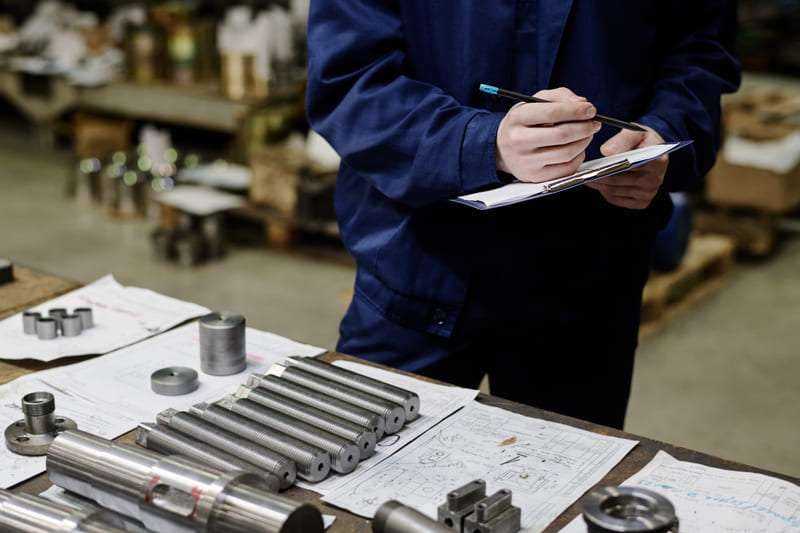
In my experience managing custom CNC projects across aerospace and medical sectors, I’ve seen FAI become a critical milestone that helps build trust and prevent costly mistakes. Before any parts go into mass production, we align our tooling, setup, and programming with the design intent. That’s where FAI steps in as a validation tool that proves everything is production-ready.
How FAI Differs from General Inspection
| Aspect | First Article Inspection (FAI) | In-Process / Final Inspection |
|---|---|---|
| Timing | Before mass production begins | During and after production |
| Scope | Full inspection of all critical features | Sampling based on control plans |
| Documentation | Comprehensive FAIR report with traceability | QC logs and batch records |
| Objective | Baseline validation of process capability | Ongoing quality monitoring |
Why It Matters in Custom Machining
Because every part we machine is custom, we treat every FAI as a contract of accountability. If we can meet your specs on the first try, we know we can scale up with confidence. FAI isn’t just about ticking a box—it’s about confirming that every detail, from hole depth to finish texture, aligns with the blueprint.
Ultimately, a solid FAI process builds the foundation for consistent quality, process control, and traceable compliance—especially in regulated environments like AS9100, ISO 13485, or IATF 16949.
Why Is FAI Important in Custom Machining?
One mistake in a complex CNC setup can multiply across dozens of parts—FAI prevents this from happening.
First Article Inspection (FAI) is essential in custom machining because it confirms that the very first part off the machine meets every requirement in the technical drawing and 3D model. By validating the setup, tooling, and programming upfront, FAI minimizes production risks, avoids batch-level defects, and ensures tight tolerances are met consistently.

From my perspective, FAI is like a handshake between the machine shop and the customer—it proves we’ve understood the drawing and translated it into a physical part with precision. Especially in industries like aerospace and medical devices, where one tolerance error can compromise safety, FAI acts as the first line of defense in quality control.
How FAI Supports Long-Term Quality
- Process Validation: Verifies that the CNC program, tool setup, fixture, and machine parameters are aligned.
- Supplier-Buyer Alignment: Opens communication channels to resolve ambiguities in GD&T, materials, or tolerances before volume production.
- Non-Conformance Prevention: Avoids rework, scrap, and shipping delays by catching discrepancies early.
- Traceability: Creates a documented record for audits, certifications (ISO 9001, AS9102), and future runs.
When It Matters Most
| Use Case | Why FAI Is Critical |
|---|---|
| New Product Launch | Ensures your part matches the CAD design before tooling investment |
| Aerospace Parts | AS9102 mandates a formal FAI for new or revised components |
| Medical Components | Biocompatibility and dimensional validation are critical before sterilization |
| Automotive Tooling | FAI supports PPAP compliance and OEM sign-offs |
In short, FAI is your gateway to reliable production. For every new or revised part we produce, this inspection isn’t optional—it’s fundamental to delivering CNC machined components that meet both regulatory standards and functional performance goals.
When Should You Perform an FAI?
Don’t wait for defects to show up in a full batch—timing your FAI right is everything.
You should perform a First Article Inspection (FAI) any time there’s a significant change to your part, process, or setup. It’s not just for new parts—it also applies to revisions, reorders, or manufacturing shifts that could affect final outcomes. FAI acts as a quality checkpoint to ensure every adjustment still meets spec before mass production begins.

From my own experience, failing to repeat FAI after a small tooling change once caused a misalignment in thread pitch—costing days in rework. That’s why I believe it’s better to over-inspect than assume repeatability.
FAI Trigger Events
| Trigger Condition | FAI Required? | Why It Matters |
|---|---|---|
| First production run of a new part | Yes | Validates CNC programming, material spec, and tolerance translation |
| Design or drawing revision | Yes | Ensures the latest spec is applied correctly |
| Change in machine, tool, or operator | Yes | Even minor changes can impact outcomes in tight-tolerance parts |
| New material lot or supplier | Case-by-case | Revalidation may be required in regulated sectors like aerospace |
| Tooling or fixture refurbishment | Yes | Worn jigs or reworked fixtures can shift datum references |
| Repeat order after long interval | Recommended | Ensures no drift in machine calibration or operator error over time |
Best Practice Tip
Always confirm FAI expectations during the quotation or PO phase. At Onlyindustries, we align inspection scope and report format with our customers from the outset—especially if they require AS9102 or ISO13485-compliant documentation.
Ultimately, the right time to perform FAI is any time you can’t afford mistakes—because catching errors early is always cheaper than fixing them late.
What’s Included in a First Article Inspection Report (FAIR)?
Too often, teams assume a part “looks right”—but in custom machining, assumption isn’t proof.
A First Article Inspection Report (FAIR) provides documented evidence that a part meets all engineering, dimensional, and material requirements. It’s the official checkpoint that transforms a “first piece” into a verified baseline for production. The more comprehensive the FAIR, the easier it is to trace quality and prevent miscommunication between supplier and buyer.

When I started working with international clients, a standardized FAIR helped bridge language and engineering expectations. Whether it was aerospace-grade fasteners or medical device housings, these reports became our mutual language of trust.
Core Components of a FAIR
| Section | Contents |
|---|---|
| Part Identification | Part number and revision level Part name or description Material type and specification Lot/batch number and quantity |
| Drawing Requirements | All dimensions and tolerances (per 2D drawing) Geometric Dimensioning and Tolerancing (GD&T) Critical-to-quality (CTQ) features highlighted |
| Measured Results | Actual measured values of each feature Inspection tools used (e.g., CMM, calipers) Clear Pass/Fail status on each dimension |
| Supporting Documents | Ballooned drawing matching feature IDs Material certification (e.g., RoHS, REACH) Surface finish and hardness reports (if applicable) Equipment calibration certificates |
Industry Standards
The AS9102 format is a widely accepted FAIR standard in aerospace. However, many clients—especially in automotive or medical industries—use custom or simplified templates. At Onlyindustries, we tailor our FAIR format based on your specification sheet or documentation expectations.
Tip for Buyers
If you’re working with a new supplier, request a sample FAIR early in the RFQ stage. It gives you insight into how seriously they treat quality—and whether they can handle your compliance needs down the line.
FAI Methods & Tools Used in CNC Machining
Even the most beautiful part can be functionally useless if it doesn’t meet spec.
That’s why First Article Inspection (FAI) isn’t just a checklist—it’s a hands-on, tool-driven process. In CNC machining, we rely on a blend of traditional tools and advanced technologies to ensure every detail matches the drawing. Selecting the right inspection method depends on the feature, tolerance level, and surface condition.
In my own shop floor experience, we found that combining tactile tools like micrometers with advanced options like CMM gave us the best balance between speed and accuracy—especially when working on aerospace mounts or orthopedic prototypes.
Common Tools Used in FAI
| Tool/Method | Purpose | Best For |
|---|---|---|
| Coordinate Measuring Machine (CMM) | Automated dimensional inspection | Complex 3D surfaces, tight-tolerance profiles |
| Micrometers & Calipers | Manual dimensional measurement | Shafts, bores, threads, ODs/IDs |
| Optical Comparator | Non-contact profile verification | Thin parts, gaskets, curved features |
| Height Gauges | Measure flatness, heights, and perpendicularity | Flat parts, stepped features |
| Surface Roughness Tester | Check surface finish (Ra, Rz) | Sealing surfaces, cosmetic zones |
| Go/No-Go Gauges | Fit/function inspection of threads or holes | Fasteners, plugs, dowel fits |

Tool Selection Based on Tolerance
High-precision parts (±0.01 mm) demand digital or automated inspection. In contrast, general-machining tolerances (±0.1 mm) may be effectively validated with calipers or manual gauges.
Calibration and Traceability
At Onlyindustries, all inspection equipment is calibrated per ISO 9001 or AS9100 standards, traceable to international metrology bodies. We log calibration dates and tool history for audit readiness.
Pro Tip
When reviewing a FAIR, don’t just look at the values—check the tools used. Knowing a CMM validated a complex geometry vs. a manual gauge adds confidence in the report’s credibility.
FAI in the Workflow of Custom Machining
Most inspection errors happen when FAI is treated as an afterthought.
In reality, First Article Inspection (FAI) must be an integrated step in the entire machining workflow—from planning and setup to execution and documentation. It acts as the gatekeeper that validates production readiness before any part moves forward in volume.

I’ve seen firsthand how a properly implemented FAI process prevented a 500-part defect run for a critical medical housing. It caught a missing radius that wasn’t visible to the naked eye but flagged during CMM inspection—saving tens of thousands in rework.
Step-by-Step FAI Workflow
- Setup and Machining: The first part is produced using final production tooling, feeds/speeds, and fixturing—this simulates real production conditions.
- Ballooned Drawing Preparation: A drawing is marked with numbered “balloons” for each measurable feature, making it easy to cross-reference inspection data.
- Dimensional Inspection: Using calibrated tools (CMM, calipers, gauges), each feature is inspected against its nominal and tolerance limits.
- Documentation & FAIR Creation: All inspection results are logged, with pass/fail status, measurement methods, and supporting certifications (e.g., material certs, surface finish reports).
- Customer Review: The FAIR is submitted to the customer for approval before mass production is released. A rejection here will trigger adjustments.
- Record Retention: All FAI documents and data are archived for traceability, audit readiness, and future repeat orders.
Where FAI Fits in the Big Picture
| Phase | FAI Role |
|---|---|
| Engineering | Defines critical-to-function features and tolerance targets |
| Programming | CAM paths and setup sheets prepared for final cut |
| Machining | First part made under full production parameters |
| Inspection | Dimensional verification and FAIR documentation |
| Approval | Customer signs off before bulk production starts |
Important Note
Skipping or minimizing FAI delays detection of process issues until after multiple parts are made—leading to scrap, rework, or field failures. Integrating it into the workflow reduces surprises later.
What If the First Article Fails?
FAI failure can feel like a roadblock, but it’s often a critical learning checkpoint.
If a part fails First Article Inspection, it doesn’t signal disaster—it highlights a process flaw that, if left unchecked, could multiply into a costly production mistake. In custom machining, where every micron matters, early correction prevents mass defects and wasted resources.

From my experience, a failed FAI often stems from something as simple as a wrong tool radius or missed datum alignment in the setup. Once, a stainless steel bracket for a surgical instrument was 0.15mm undersized due to thermal expansion the team hadn’t factored in. Catching that saved 300 units from being scrapped.
Common Causes of FAI Failure
- Tool wear or breakage
- Incorrect toolpath or CAM program logic
- Improper fixturing or alignment
- Operator error or incorrect setup sheet interpretation
- Raw material out of spec
What Happens Next?
- Root Cause Analysis (RCA): The first step is to investigate why the deviation occurred. This could involve reviewing CAM code, tooling logs, operator actions, or measurement methods.
- Corrective Action: Adjustments are made to eliminate the issue—reprogramming, fixture tuning, tool replacement, or parameter recalibration.
- Re-Machining: A new part is machined using corrected processes under identical production conditions.
- Repeat FAI: A full or partial FAI is performed again to validate corrections. Only after passing is the part cleared for production.
Partial vs. Full Re-FAI
| Situation | Action |
|---|---|
| Minor tooling adjustment | Partial re-FAI for impacted features |
| Major CAM change or drawing revision | Full re-FAI across all features |
| Out-of-tolerance material or incorrect spec | Restart FAI with compliant material |
Best Practices When FAI Fails
- Document everything: nonconformance, corrective action, and sign-off logs
- Communicate clearly with the customer to reset delivery expectations
- Use the event to refine internal process controls and prevent future repeats
Remember, catching a failure in the first part is far better than catching it in the hundredth. FAI isn’t about perfection—it’s about validation and continuous improvement.
FAI for Repeat Orders & Long-Term Projects
Even familiar parts need fresh scrutiny when time or change enters the picture.
In custom machining, repeat orders or long-term projects may seem like “known quantities”—but small changes in tooling, materials, or operators can introduce inconsistencies. That’s why repeat First Article Inspections (FAIs) are essential for maintaining reliability over time.
I once worked with a customer in the aerospace sector who reordered the same turbine bracket after 18 months. Even though we used the same fixture design, our updated CNC mill—while more advanced—introduced minor variances in toolpaths. A fresh FAI helped us catch this shift before hundreds of units were affected.
When to Perform a Repeat FAI
| Trigger | Reason for FAI |
|---|---|
| Significant time gap between orders (6–12 months+) | Tooling, setup, or process drift may occur |
| New material lot or supplier | Material properties may vary and affect machining |
| Equipment or platform change | Different machines may have microbehavioral differences |
| Operator or programmer change | Process interpretation or input errors could arise |
| Program reversion or update | New CAM logic might affect part dimensions |
Types of Re-FAI
- Full FAI: Performed when a major variable changes—material spec, machine platform, or customer drawing revision.
- Delta FAI: A limited re-inspection focusing only on the features or dimensions affected by the change.
Traceability and Documentation
For regulated industries like aerospace or defense, traceability is non-negotiable. FAI reports from prior batches should be archived and referenced to assess whether a re-FAI is needed. Documentation also helps satisfy ISO 9001, AS9102, and customer audit requirements.

Best Practices
- Keep a change log for every part to track machine, program, or fixture updates
- Flag long-lead-time or infrequent orders for mandatory re-FAI review
- Create a checklist to trigger full vs. delta FAIs based on risk level
- Store FAIRs alongside inspection records and batch traceability reports
In my view, a smart FAI policy for repeat orders is like insurance for your production integrity. It’s not just about compliance—it’s about maintaining the trust your customers place in your precision.
Conclusion
First Article Inspection guarantees production quality from the very first part.
Whether you’re launching a brand-new component or managing a repeat project with legacy tooling, First Article Inspection (FAI) acts as the gateway between design intent and real-world execution. It ensures your CNC machining process is stable, accurate, and fully aligned with customer expectations from the start.
I’ve seen firsthand how a well-run FAI catches issues like slight tool offsets, unexpected burrs, or overlooked drawing revisions before they become costly production headaches. It’s not just about ticking boxes—it’s about safeguarding your reputation and your customer’s confidence.
For industries where tight tolerances, traceability, and compliance are critical—like aerospace, medical devices, and automotive—FAI isn’t optional. It’s an investment in long-term quality and accountability.
At Onlyindustries, we don’t treat FAI as just paperwork. We integrate it into our quality culture, giving you measurable assurance that the parts we deliver will perform exactly as intended.
Looking for a machining partner that takes inspection as seriously as you do?
Contact Onlyindustries today to discuss your project and discover how our FAI-supported workflow can elevate your manufacturing outcomes.