Skip to content
Inconsistent anodized colors can disrupt your product aesthetics, lead to rejections, and damage your brand image. But there’s a way to take control.
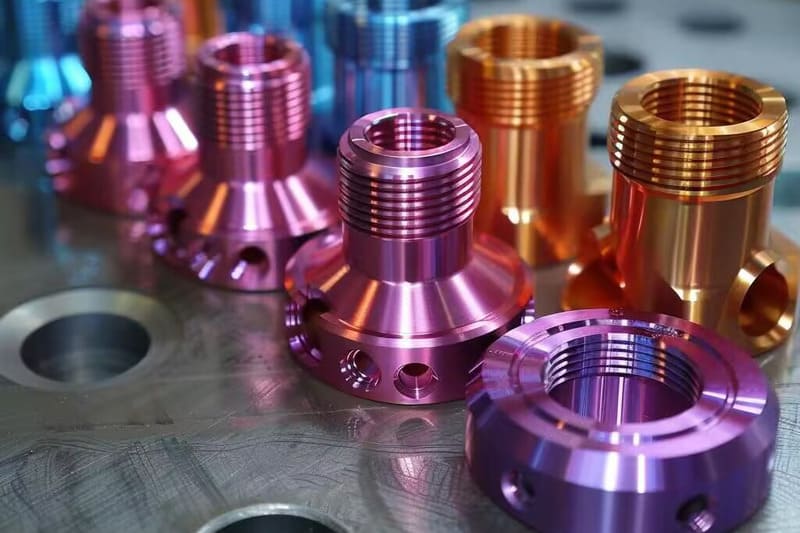
Anodized aluminum colors are created through a delicate balance of alloy choice, surface preparation, anodizing process control, and dye chemistry. Achieving consistent results across batches requires more than guesswork—it requires discipline, standards, and supplier alignment.
In this guide, I’ll walk you through how anodized colors are created, why consistency is so challenging, and how we at Onlyindustries help our clients ensure their parts meet visual expectations batch after batch.
What Is Anodizing?
Raw aluminum corrodes, stains, and scratches—anodizing prevents that and unlocks its aesthetic potential.
Anodizing is an electrochemical process that thickens the natural oxide layer on aluminum parts. This hardened layer resists corrosion, improves wear resistance, and—crucially—absorbs dyes or metallic salts for long-lasting color. The process is widely used in industries demanding both function and finish, from aerospace to consumer electronics.
How Anodizing Works
The aluminum part is submerged in an acid electrolyte bath (often sulfuric acid) while electric current is applied. The aluminum acts as the anode (hence the name “anodizing”), and oxygen released from the electrolyte bonds with the surface to form aluminum oxide. This oxide is:
- Porous: Enabling absorption of dyes or metal-based colorants
- Transparent: Allowing light to interact with underlying finishes
- Harder than base aluminum: Comparable to sapphire in hardness
- Non-conductive: Offering electrical insulation properties
Key Characteristics
| Feature | Why It Matters |
|---|---|
| Corrosion Resistance | Protects parts from oxidation, especially in humid or marine environments |
| Color Capability | Supports vibrant, durable colors through dye or electrolytic methods |
| Surface Hardness | Improves wear resistance for high-touch or abrasive applications |
| Eco-Friendly | No VOCs or heavy metals; clean and sustainable surface finishing |
Why This Matters to You
Whether you’re designing premium housings for consumer electronics or architectural panels that must survive years outdoors, anodizing provides both the protection and aesthetic consistency you need. At Onlyindustries, we control every parameter of the anodizing process—from bath chemistry to oxide thickness—to meet your color, durability, and branding requirements without compromise.
How Colors Are Created in Anodized Aluminum?
Coloring anodized aluminum isn’t paint—it’s chemistry. Done right, the results are vibrant, durable, and embedded in the material itself.
The anodized aluminum color you see is not applied like ink or coating—it’s formed by how light interacts with the anodic oxide layer and how that layer is modified by dyes or metal ions. There are three distinct coloring methods, each with its advantages, limitations, and ideal use cases.
1. Organic Dye Coloring
This method introduces organic dyes into the microscopic pores of the anodized aluminum before sealing. The color is then locked in during the final sealing stage, typically with hot water or nickel acetate.
- Pros: Bright, vibrant colors like red, blue, green, orange
- Cons: Less UV-resistant unless UV-stable dyes are used
- Best For: Consumer electronics, decorative trim, branding elements
2. Electrolytic Coloring (Two-Step)
After anodizing, the part is immersed in a second bath containing metal salts such as tin, cobalt, or nickel. An AC electrical current deposits the metal ions into the pores, creating color through light interference.
- Pros: Excellent weather and light resistance; metallic finish
- Cons: Limited to black, bronze, champagne, and gray tones
- Best For: Architectural panels, outdoor fixtures, marine applications

3. Integral Coloring
In this method, the aluminum oxide and metal salts are co-deposited during the anodizing process itself. The result is a colored, highly durable oxide layer formed in a single step.
- Pros: Extremely durable and abrasion-resistant
- Cons: Narrow color palette—usually bronze or dark gray
- Best For: Architectural uses, transport frames, high-abuse components
Visual and Functional Differences
| Coloring Method | Color Range | UV Resistance | Durability | Application Examples |
|---|---|---|---|---|
| Organic Dye | Wide, vibrant spectrum | Low–Medium | Medium | Laptop housings, branding |
| Electrolytic | Neutral, metallic tones | High | High | Window frames, railings |
| Integral | Bronze, black | High | Very High | Building facades, transit interiors |
Why It Matters
If you’re engineering for visual consistency or long-term UV exposure, choosing the right coloring method is critical. At Onlyindustries, we help clients select the optimal process based on functional requirements, design specs, and environmental exposure. We also provide pre-production color samples to ensure what you see is exactly what you’ll get—at scale.
What Factors Influence Anodized Aluminum Color Matching Accuracy?
Anodizing color variation isn’t just frustrating—it can delay production, trigger rejections, and create costly scrap. Here’s why it happens and how to avoid it.

Color differences in anodized aluminum often stem from uncontrolled or misunderstood variables across the design, prep, and process stages. Even slight deviations in surface prep or bath chemistry can shift perceived color, especially under critical lighting or when parts are adjacent.
Key Variables to Control
| Factor | Description | Impact on Color |
|---|---|---|
| Aluminum Alloy | 5005, 6061, and 6063 offer consistent anodizing performance. 2xxx/7xxx alloys contain copper/zinc, which interfere with oxide growth. | Discoloration, patchiness, or unexpected undertones |
| Surface Finish | Brushed, polished, bead-blasted, or matte surfaces reflect light differently even with identical dye. | Perceived brightness or tone variation across parts |
| Oxide Layer Thickness | Thicker oxide affects light interference and dye absorption; typically 10–25 microns for standard decorative use. | Darker tones or slight hue shifts |
| Dye Composition & Concentration | Dyes degrade over time or with temperature fluctuations; consistency requires regular monitoring. | Fading, mismatched shades, or uneven coverage |
| Sealing Method | DI water or nickel acetate must be tightly controlled for time and temperature. Inconsistent sealing causes post-process color change. | Color instability and UV fading |
| Batch-to-Batch Parameters | Voltage, bath temperature, immersion time, and operator practice can shift subtly between production runs. | Visual mismatch between lots—even if within spec |
Case Insight
We had a client in the medical device space whose aluminum enclosures showed a noticeable tone difference between top and bottom plates. The issue? They used 6061 for one part and 2024 for the other, which reacts differently to dye. Once we realigned their alloy choice and standardized their finish prep, color consistency improved to ΔE < 1.0 across runs.
Why It Matters
If your components will be adjacent or consumer-facing, visual consistency is more than a cosmetic issue—it’s a brand requirement. At Onlyindustries, we audit each of these factors with our partners before running production, ensuring you get the color you signed off on, every time. We also help define ΔE thresholds based on industry best practices and your visual requirements.
How to Ensure Consistent Anodized Aluminum Color Matches?
Matching anodized aluminum color isn’t just art—it’s precision engineering backed by standards and discipline.
Color matching challenges often trace back to uncontrolled upstream variables. By taking a systems-based approach—starting with alloy selection and ending with supplier quality—you can lock in visual consistency that holds up from prototype to full-scale production.
1. Select the Right Aluminum Alloy
Start with anodizing-friendly materials. Alloys like 5005, 6061, and 6063 are known for producing uniform oxide layers. Avoid mixing alloys in one assembly, as slight chemistry differences will affect oxide growth and color tone—even when dyed identically.

2. Standardize Surface Finish
Specify the exact mechanical pre-treatment: brushed #4, bead-blasted, bright-dipped, or matte etched. These finishes affect reflectivity and light interaction with the anodized layer. Even the same dye will appear differently depending on the base finish texture.
3. Maintain Precise Anodizing Parameters
Color depends heavily on process control. Use programmable rectifiers to maintain stable current/voltage, and tightly regulate bath temperature (target ~20°C ±1°C), acid concentration, and immersion time. Document these variables as part of your standard operating procedure.
4. Control Dye Bath Chemistry
Dye concentration, pH, and temperature all influence how color is absorbed into the oxide layer. Replace dyes periodically and stir continuously to avoid concentration gradients. Monitor dye bath pH (typically 4–6) to prevent color shifts during extended runs.
5. Seal Consistently
Use hot deionized water or nickel acetate sealing. Poor sealing can cause uneven tone or accelerated fading under UV exposure. Standardize sealing time and temperature (typically 95–98°C for 15–30 minutes) for each part geometry and finish.
6. Use Master Color Standards
Establish a visual and spectrophotometric color standard for each part and finish. Use CIELAB values and ΔE tolerance thresholds. Aim for ΔE < 1.0 for premium finishes or visual adjacency. Store physical samples under controlled lighting for reliable visual comparison.
7. Ensure Supplier Process Stability
If you outsource anodizing, audit your vendor’s controls and consistency. Ensure they can measure and document oxide thickness, dye pH, bath temperature, and ΔE. Require First Article Inspection (FAI) and retain samples per batch for traceability.
8. Design for Color Tolerance
Some variability is inevitable. Reduce its visual impact through smart part separation—use design breaks, chamfers, or textured trim. Avoid butt-joining two anodized components from different production runs unless both parts meet tight ΔE criteria.
Why This Matters
If color consistency is tied to your product quality, every step of this workflow becomes a requirement—not an option. At Onlyindustries, we help clients design anodizing strategies into their part specs, coordinate with our controlled finishing partners, and run ΔE testing as part of our production validation process.
Understanding ΔE: The Science of Color Difference
When it comes to anodized aluminum, your eye might notice the mismatch—but ΔE puts a number to it.
ΔE (Delta E) is the standardized metric used to quantify color differences in the CIELAB color space. Rather than relying on subjective visual judgment alone, ΔE gives you a repeatable, measurable way to evaluate how closely two colors match—between parts, batches, or suppliers.

How ΔE Works
CIELAB defines color based on three values:
- L* (Lightness): 0 is black, 100 is white
- a* (Red/Green): Negative is green, positive is red
- b* (Blue/Yellow): Negative is blue, positive is yellow
ΔE is the Euclidean distance between two points in this 3D space: ΔE = √[(ΔL*)² + (Δa*)² + (Δb*)²]
Interpreting ΔE Values
| ΔE Range | Visual Perception | Typical Use Case |
|---|---|---|
| < 1.0 | Indistinguishable to human eye | High-end consumer products, adjacent parts |
| 1.0 – 2.0 | Visible under close inspection | Architectural trim, medical housings |
| > 2.0 | Clearly noticeable | May trigger rejection or require rework |
Why ΔE Is Critical
Even small tonal shifts between anodized parts can appear as glaring defects in consumer or architectural applications. By using ΔE values:
- You can set objective standards for suppliers
- Define pass/fail limits for first articles
- Ensure color harmony in multi-component assemblies
At Onlyindustries, we help customers specify ΔE thresholds as part of their technical drawings, and we validate those tolerances with calibrated spectrophotometers at both the anodizing facility and in final inspection.
Real-World Tip
If you’re launching a new anodized product line, start by creating a “master color swatch” under standardized lighting (D65 daylight). We’ll store it alongside digital L*a*b* values and use it as a reference throughout your production lifecycle—even across supplier transitions.
Applications That Demand Color Matching Precision
Color isn’t just cosmetic—it’s a brand promise, a compliance issue, and a functional requirement in many industries.
In sectors where appearance, branding, or performance matters, even slight mismatches in anodized aluminum color can lead to rejections, returns, or reworks. Whether it’s consumer tech or architectural panels, maintaining tight color tolerance is mission-critical.

Where Tight Color Matching Is Essential
| Industry | Use Case | Color Tolerance Importance | Why It Matters |
|---|---|---|---|
| Consumer Electronics | Phone casings, laptop enclosures, audio components | Very High | Products must be visually flawless; mismatches undermine perceived quality |
| Architectural | Building facades, window frames, railings | High | Color must match across large surfaces, visible under varying light |
| Medical Devices | Instrument handles, surgical casings, diagnostic housings | Medium | Visual identification and brand consistency are crucial for regulatory and end-user trust |
| Automotive | Interior trim, knobs, decorative accents | Medium | Drivers notice mismatched parts; visual continuity supports brand luxury image |
| Industrial Equipment | Control panels, machine covers, interface housings | Low–Medium | While not always aesthetic, mismatched components may signal quality lapses |
Industry Note
We once supported an architectural OEM whose window frame extrusion supplier changed from 6063 to 6061. Though structurally fine, the color mismatch under daylight was immediately rejected by the contractor. After switching back to 6063 and standardizing their anodizing vendor, they’ve passed every site inspection since.
Why It Matters
If your product will be seen, touched, or installed next to another anodized component, your color tolerance must be enforced—not guessed. At Onlyindustries, we help manufacturers set realistic but tight ΔE thresholds based on lighting, part adjacency, and user expectations in each industry.
What Quality Control Measures Ensure Color Matching?
Without color QA, even a perfect anodizing run can deliver mismatched results. Precision requires proof.
Ensuring anodized aluminum color consistency across production batches and suppliers means going beyond visual checks. From spectrophotometry to oxide thickness validation, each step in the QA process confirms that the color you specified is the color you’ll receive—across every part and every run.

Essential QC Tools and Methods
| Method | Purpose | Why It Matters |
|---|---|---|
| Visual Inspection (D65 Light Box) | Evaluates color under standardized daylight conditions | Detects visual mismatches that would appear in end-use lighting |
| Spectrophotometric Testing | Measures L*a*b* color coordinates and calculates ΔE values | Provides objective, quantifiable comparison to master color standards |
| Oxide Thickness Measurement | Uses eddy current meters to verify anodic film thickness (μm) | Ensures consistent dye uptake and light interaction properties |
| Salt Spray & UV Resistance Testing | Accelerated aging tests for weatherable parts (ASTM B117, ISO 2135) | Confirms outdoor performance of color and coating durability |
| Batch Traceability & Records | Documents process parameters, color measurements, and sealing data per lot | Allows root cause analysis and supplier accountability if color issues arise |
Case Note
In one of our telecom projects, inconsistent dye performance was traced back to pH drift in the supplier’s dye bath—confirmed through spectrophotometer readings exceeding ΔE 2.1. After implementing dye pH logging and color standard re-validation, mismatch complaints dropped to zero.
Why It Matters
If your brand depends on anodized consistency, color verification isn’t optional. At Onlyindustries, we combine visual, dimensional, and spectro testing in our anodizing validation. Every critical batch includes a first article color report with ΔE scoring and oxide thickness charts—so your part quality is confirmed, not assumed.
Conclusion
Perfect color matches in anodized aluminum come from controlled variables—not luck.
Whether you’re building surgical housings, smartphone frames, or architectural trim, color consistency is a mark of manufacturing excellence. Small mismatches signal big quality gaps to your customers and stakeholders. By mastering alloy choice, anodizing chemistry, and quality control, you ensure every part reflects your brand—flawlessly.
At Onlyindustries, we go beyond standard finishing. We partner with engineers and buyers to:
- Select the right alloys and surface prep for visual uniformity
- Define ΔE thresholds and test against spectrophotometric color standards
- Document every anodizing parameter for full traceability
- Deliver scalable color consistency—from prototype to high-volume runs
Ready to elevate your product’s finish with precision color control? Reach out to our anodizing specialists for design input, FAI support, and repeatable anodizing strategies that meet the strictest visual standards in the industry.